SHADOWS AMONG SHADOWS


1

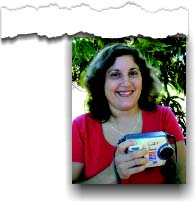
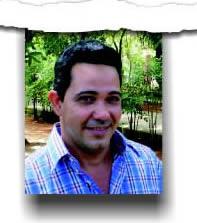
THE AUTHORS

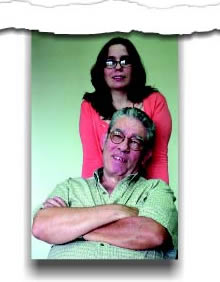
"The Dissidents" is a book that was urgently asking to be written. The idea came to us shortly after the Minister of Foreign Relations of Cuba, Felipe Pérez Roque, held a press conference explaining the reasons that had led the Cuban government to charge and sentence as mercenaries those individuals who had collaborated, throughout the years, with U.S. agencies and terrorist organizations working, for the most part, from Miami.

During this press conference, the foreign minister revealed that a number of State Security agents who had infiltrated the mercenary groups had testified in their trials. The evidence presented by Cuba was irrefutable.

One week later, we found ourselves before the 12 agents who had revealed themselves after years of living in the ranks and files of the so-called "opposition", "internal dissidence movement", or "independent


journalists and librarians", as they are called by the enemies of the Revolution.

We shan't be giving away the book's secrets. The stories told by these men and women give us the clearest possible picture of those who devote themselves to the game of the "opposition" in Cuba: hostages of the Miami mobsters and shameless employees of the U.S. Interests Section in Cuba, whose officials, while opening the doors of their homes and their stock-rooms to them, and perhaps for precisely this reason, showed them the most vicious disdain. Is it anything less than an insult to promote mad scrambles over gifts on official U.S. Interests Section premises? And to hand out a U.S. visa in exchange for written proof of counterrevolutionary behaviour?

We're not short of anecdotes. Although we worked for many exhausting days, sometimes in search of details that were apparently trivial, those interviewed were not only extraordinarily well-disposed to converse with us — we would tape and transcribe the material almost simultaneously — but were also responsible for making a great many of the documents presented in this book available to us.

Patiently, they helped us identify, in the jungle of photographs and documents, the characters you will find in these pages. The vast majority of photos showing parties and meetings attended by "dissidents" were taken by them, and they have an incalculable documentary value. Some of the photos were chosen because of their testimonial value, despite the fact that, technically, they leave much to be desired. They were taken during Cuban State Security operations.

Many of those interviewed knew each other from their work in the "dissident" community. Some had friendly relations, while others were rivals in groups notorious for constant quarrels among themselves. No one knew that they were really working for the same team, and finding this out was quite possibly the most poignant

2


moment in a process that saw all manner of emotions: from those who would have liked to continue in the shadows, feeling that they were at their peak in their work as agents — this is the case of Orrio, Aleida and Odilia — to one who longed for a peaceful respite among his own, namely Baguer.

What was common to all was the intimate and profound relationship they had with the officials of the Ministry of the Interior supervising their work. These people — shadows among shadows — were responsible for weaving this extraordinary web that has finally allowed us to know the truth, without the enemy ever suspecting how vulnerable they were — and are — in the shadow of the eagle.

Havana, April 30, 2003

3


4

Today the so-called "dissidents", actually mercenaries
on the payroll of Bush's Hitler-like government,
are betraying not only their homeland,
but all of humanity as well.

Fidel Castro

May 1, 2003


I ALWAYS KNEW I WAS NOT ALONE

Aleida godínez soler


5


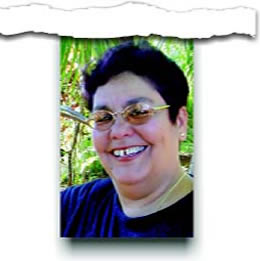
She has a prodigious memory, trained by half a lifetime devoted to conspiratorial work. She can remember exact dates, the content of documents, the apparel worn by people, the complete names of those individuals she met in so-called Cuban "opposition groups", and of American officials who knew her as one of the frequent visitors to the official headquarters of the U.S. Interests Section in Havana.

There are hundreds of pages on the Internet devoted to the dissident Aleida Godínez Soler, to her news reports, the declarations she made in Havana, to her long and active career as a counterrevolutionary. On the U.S. State Department website www.terrorismcentral.com, one can find articles of this nature: "The first National Conference of the Independent Worker's Confederation was held in the home of the active dissident and independent journalist Aleida Godínez… In the document that was drafted, the September Declaration, they criticized the human rights viola-


tions endured by workers under the CTC, a communist organization, member of the pro-Soviet World Federation of Trade Unions."

Despite this, we knew very little about this woman's background on beginning an interview shortly after the trial brought against members of "dissident" organizations, her former colleagues. We knew only that she is Agent Vilma from the ranks of State Security, and that she was born to a working class family. Her mother was blacklisted by the Bureau for the Repression of Communist Activities (Buró Represivo de Actividades Anticomunistas, BRAC) during the Batista dictatorship, and when this fact is mentioned, she smiles sadly. One can imagine what suffering a "counterrevolutionary" daughter brought to a mother persecuted by the sinister BRAC.

AGENT VILMA

How did everything begin?

By chance. Certain circumstances led me to make ties to a counterrevolutionary in 1991, the first human rights activist in the province of Ciego de Ávila, where I was born. He told me about the Cuban Committee for Human Rights, which was directed back then and is still directed today by Gustavo Arcos Bergnes.

Who is this man who introduced you to the Arcos Bergnes group?

His name is Mario Fernández.

Who is he?

He's a pensioner. An elderly man, who "convinced" me join the Committee, which I did, in January of 1992.

What had he done, before retiring?

He had always been a counterrevolutionary, really. He was someone who didn't share the ideas and principles of the Revolution, and he'd been out of work for quite some time.

Where did he live?

In Ciego de Ávila. On Independence Street, between 10th and 11th, in the Vista Alegre district.

6


And why did he approach you?

I worked for the Construction Materials Company in Ciego de Ávila, and I had to walk down Independence Street to get to work. I walked down that street everyday, and we would greet one another, we would speak a few words, and one fine day he spoke to me quite openly about the matter…

Why was that?

He was a singular individual. He had no inhibitions in speaking to you; he would say everything in a loud tone of voice without the slightest concern. He would speak to me about the Universal Declaration of Human Rights and how it was violated in Cuba, just like that, shamelessly. Seeing where this man was coming from, I went to consult an official of the Ministry of the Interior and I mentioned what was happening …

You simply went to the Ministry, just like that, to speak with whatever official you found there?

No. I had already collaborated a long time before that. My first involvement with State Security dates back to October 21, 1979, when I was still a student. I graduated in Economics in 1988, and at the time I met this man I was applying to start the long-distance course offered by the law school.

They gave you a green light…

Yes. I agreed to speak to him, to find out what it was he wanted, what his intentions were. And so, this way, I began to study this man. When we saw that this was going to work, I quit my job at the company and began acting as a full-fledged counterrevolutionary.

What was your job at the company?

I was a specialist in the Organization of Work and Wages department, until December of 1991, when Mario Fernández introduced me to the leaders of the so-called Cuban Committee for Human Rights. Through him, I met a man who has been living in Miami since March of 1994, who continues working for this organization there.

7


What is his name?

Felipe Alexis Morejón.

And who was he?

He was the delegate for the Cuban Committee for Human Rights in Ciego de Ávila. Through him, I met the counterrevolutionary Rodolfo Santos, a professional photographer, who works freelance. State Security had elaborated a plan for me to travel to Havana, after getting to know these people, and to try and establish links with a number of counterrevolutionaries, Vilma Fernández Batista and Pablo Reyes Martínez among them, who were members of the Cuban Civic Union, an organization that disappeared after both of them left the country. I finally made the trip and this led to my first direct contact with Radio "Martí". When I returned to Ciego de Ávila, I was already known as a counterrevolutionary and had my first "war trophy"…

What was the contact with Radio "Martí" like?

It was the most fatuous, the most stupid thing in the world. Vilma said, "Here I have an activist who wants to share some information with you," and Radio "Martí" was already calling, delighted with what you can "report", without verifying the slightest detail, whether you are lying or telling the truth on the air.

Do you remember who you spoke with from Radio "Martí"?

How can I forget! I spoke with Juana Isa. I returned to Ciego de Ávila transformed into the spokesperson for the Cuban Committee for Human Rights in Ciego de Ávila. I was doing that for quite some time. When the telephone connections with the United States were cut in the early 90s, a Cuban who lives in Canada, Antonio Tang Báez, got in touch with me. He was the one who had the connections in Radio "Martí", in the Voice of the CID, run by Hubert Matos, and in La Cubanísima as well. He used to phone from Montreal and then set up a conference call to connect us to Tomás Madrigal, from the station called Independent and Democratic Cuba. At times, he would put us through to Juana Isa herself.

8


Antonio Tang Báez

Born in Ciego de Ávila, and a cook by trade. He lives in Montreal, Canada. He defected in Canada in September of 1981 during a stopover on a tour of former socialist bloc countries. In Cuba, he had worked as head of personnel at the provincial Public Health unit in his native city.

On July 14 of 1985, journalist Michel Rousseau published an article in the Journal de Montréal which linked Tang Báez to activities against Canadian tourists perpetrated by Alpha 66.

That same year, he had collaborated in the elaboration of an assassination plot against President Fidel Castro organized by Alpha 66. He openly advocated the use of violence. On one of his frequent visits to Miami, he received military training to carry out terrorist acts.

He has systematic contact with members of counterrevolutionary groups within Cuba. He served as an intermediary between Elizardo Sampedro Marín and the head of the counterrevolutionary organization Alpha 66, Andrés Nazario Sargén.

He instructed Sampedro Marín to distribute faxes with threatening messages, which were also sent to the Mexican Embassy in Cuba. For these activities, Sampedro Marín was arrested on February 17, 2001 and sentenced to a four-year prison term.

Did they ask you to speak about anything in particular?

At the time, they were prioritizing the situation of prisoners sentenced for crimes against state security. They were extremely interested in the social situation in the country and their stance was very aggressive. The counterrevolutionaries in Miami were calling on people to paint anti-government banners, to sabotage installations, to bring about blackouts and water failures. It was a time when counterrevolutionaries were looking for a way to wear down the officials of State Security. They would paint a sign on one street corner, and when it was erased, they would put up another one to keep them running. Through this fellow in Canada, between August 1st of 1992 and August of 1993, I personally denounced 102 alleged human rights violations on Radio "Martí".

9


Thanks to my frequent collaboration with this radio station, I grew closer and closer to the main counterrevolutionary leaders in Havana. I made contacts with the Cuban Christian Democratic Movement (Movimiento Cubano-Demócrata Cristiano), directed by a podiatrist, María Valdés Rosado; with the Maceo Movement for Dignity (Moviemiento Maceista por la Dignidad), headed by a woman who boasted of her links to the Cuban-American National Foundation (Fundación Nacional Cubanoamericana, FNCA), Ángela Herrera Carrillo. I also made contact with Osvaldo Payá Sardińas, main leader of the Chrístian Liberation Movement (Movimiento Cristiano Liberación). In brief, with the entire so-called "opposition" in Havana.

You would show up, just like that, without further introduction, and they would welcome you?

It was very strange, because every time I showed up before them, they would greet me with open arms. I was someone new, who could expand their movement toward the rest of the country. All of those delegations asked me for some kind of support, to establish branches in the province of Ciego de Ávila and Camagüey. The Committee for Human Rights already had a branch in Ciego de Ávila, it had been one of the first counterrevolutionary organizations and it apparently had members throughout the country — you know, a handful of people here and there — and all of them were anxiously looking for collaborators. I was delighted to do it, I gave them the support they asked for, on behalf of State Security.

It was a time of very intense labor, when we founded the delegations for the Cuban Christian Democratic Movement, the Maceo Movement, and continued supporting the Cuban Committee for Human Rights. There was a time, between 1992 and 1994, when I got to be the director of all these organizations in Ciego de Ávila.

How many members were under your leadership?

There were 11 members in the delegation for the Cuban Christian Democratic Movement. Eight out of those 11 members were trying to leave the country and, in fact, they're not in Cuba at the moment. Of the remaining three, I later discovered that one of them was an agent who was working for us. The same was true in other

10


movements. The group that had the most members was the Cuban Committee for Human Rights, with something like 15 or 20 people. All of them left the country during those years. The counterrevolutionaries that make up the organization today are new members.

Enrique Blanco Rodríguez

Representative and spokesperson for the counterrevolutionary organization known as Independent and Democratic Cuba (Cuba Independiente y Democrática, CID), headed by Hubert Matos Benítez.

In the 1990s, he created the so-called Operation Liborio, with the aim of sending medicines to counterrevolutionaries and their families in Cuba, an activity that continues to this day.

He has ties to leaders of counterrevolutionary organizations on the island, particularly with Roberto de Miranda Hernández, of the "Independent" Teachers Association of Cuba, whom he supplies with medicines and money.

What things would they do to "score points" within the movement?

In 1994, an operation was carried out in the province, because the anti-government signs were getting out of hand and there were violent plans in the making. One of those counterrevolutionaries, José Carlos Morgado Hernández, told me they were going to bomb the electrical registers in the provincial capital, Ciego de Ávila. He even invited me to see the places they were going to bomb. I remember getting on the back of his bicycle and he went about showing me, one by one, the places they were most probably going to sabotage. He showed me the electrical register located on Simon Reyes Street, between Independence and Libertad, one of the busiest zones in the city. I was shocked. By the details he was giving me, it was obvious they were really preparing themselves for this. State Security had to intervene. All of them were arrested, including me. Of course, that "repressive action taken by the Castro regime" was immediately denounced in Disidente magazine, published in Puerto Rico.

11


How long were you detained for?

Six or seven days.

Did they find the explosives?

They never found them, although they suspected they were going to be home-made. They had to take swift action in any event. It was clear they were willing to do anything to attract attention. The Cuban Committee for Human Rights made me leave the group, because they got quite a scare. They immediately published a communiqué disassociating themselves from the sabotage plans, which was signed by Jesús Alberto Sotuyo Zamora and Roxana Valdivia Castilla. The operation was carried out well, and my prestige was left intact. I still have a handwritten declaration, in a center page of a school notebook, where one of the members of the Cuban Committee for Human Rights accuses Pedro Argüelles Morán, who is now in prison, of being the one responsible for the anti-government signs that were put up in Ciego de Ávila. He did it in a shameless manner, as well.

What ties did the Cuban-American National Foundation have with these people?

At the time, the public stance of the Foundation was very aggressive. The instructions were received through the radio — as we know there are more than a thousand hours devoted to anti-Cuban broadcasts a week — and these called on Cubans to practice civil disobedience. I remember the slogans perfectly well: "Cuban, rebel!", "Cuban, protest, put up banners, sabotage…"

Do you remember one voice in particular?

That of Ninoska Pérez. The station Independent and Democratic Cuba was also constantly exhorting members of the military to rebel. The extremely few members of the "opposition" groups, all of whom were of a very low moral caliber and whose main interest was in making enough noise to be given a visa to the United States, all realized what the instructions were about: violent action. After the operation and others that frustrated attacks on the population — many of these terrorist designs were neutralized while still in an

12


embryonic stage — their tactics changed, or, at the very least, their discourse changed. They went from aggressive language to pacifistic blather, they began drafting documents, petitions, demands…

What did you do then?

I was involved with the Cuban Christian Democratic Movement and they invited me to join the so-called Cuban Council, which I didn't join, on instructions from State Security.

Center for a Free Cuba

The so-called Center for a Free Cuba, based in Washington D.C., was founded by counterrevolutionary Frank Calzón in October of 1997, with the explicit aim of working toward the overthrow of the Cuban Revolution.

The Center for a Free Cuba carries out its anti-Cuban programs with funding from the U.S. Agency for International Development (USAID) and the National Endowment for Democracy (NED), as well as from private donations.

In October of 1997, in order to carry out its subversive plans against Cuba, the organization received more than 200,000 dollars as private donations from the Cuban-American community, 400,000 dollars from USAID and 15,000 from the NED. In the year 2000, it was given a budget of 1,450,000 dollars by USAID to execute its plans, and in 2002, it received another 2,249,709 dollars from the same agency.

All of its programs have been aimed at spreading counterrevolutionary propaganda in Cuba with regard to a supposed political transition and stimulating a market economy, as well as giving support to internal counterrevolutionary groups and encouraging the international community to play an active role in the promotion of subversive activities on the island.

The material aid given to the counterrevolutionary groups has included personal computers, laptops, typewriters, fax machines, photocopiers, shortwave radios, cameras, tape recorders and other office supplies, as well as medicine, food and clothing.

13


I continued with my trips to Havana to visit the counterrevolutionaries. In March of 1995, the Cuban newspaper Granma published a document that Joseph Sullivan, the head of the U.S. Interests Section at the time, had sent to the U.S. State Department. It described the corruption within the Cuban Committee for Human Rights, with regard to the sale of endorsements for visas to leave the country. There, I found myself involved in an incident that exemplifies how corrupt the Committee was.

What happened?

I had met a family from La Guajira district, in Ciego de Ávila. The head of the household, Gabriel Martín Ferras, was in jail, serving a nine or ten year sentence. Among the instructions I had received from the Committee was that of visiting the jails and giving the inmates a bit of sugar, some ground cereal… And, of course, to try to gather information that we could later use in the enemy radio broadcasts. Martín Ferras' son, Eber, approached me and told me he wanted to leave the country. "No problem," I told him, "I'll recommend you and you can leave. You're the son of a prisoner." At the time, I could make those recommendations because I had contacts in the U.S. Interests Section, thanks to my ties to Aida Valdés Santana, leader of the Cuban Committee for Human Rights. She could get people out of the country through the Interests Section's refugee program. She had told me, "Recommend anyone who wants to leave the country, and they can leave."

What does Felipe Alexis Morejón do to try and eliminate me as leader of the counterrevolution in Ciego de Ávila? He travels to Havana and takes the form I had given Eber to Gustavo Arcos, and tells the president of the Committee that I had charged him for the service. First he tells him I charged him 2,000 Cuban pesos, then that it was actually 5,000, and then that it was 10,000. Of course, I hadn't charged him a cent, but because of what had been published in Granma, he took advantage of that to try and discredit me…In other words, he was using against me what they knew was absolutely true: that many of the "opposition" leaders were in fact mobsters who used their ties to the Interests Section to get rich.

14


How many endorsements did you give?

Many, always in consultation with my superiors. In a sense, it was doing something morally right in an immoral context to recommend someone you knew was not a member of the "opposition", but rather wanted to emigrate to the United States for family or economic interests, and had no chance of obtaining a visa from the United States through the regular channels.

What happened to Aida Valdés Santana?

She was expelled from the Cuban Committee for Human Rights, because she had made a fortune selling fraudulent endorsements. They had used the same argument against me, to try to discredit my leadership in Ciego de Ávila, because I was the person who could mobilize people, who got instructions from Havana and set down the law about what could be done, because I worked to get rid of the practice of putting up signs, of sabotage, to move towards monitoring human rights violations. I turned them into distributors of the UN Universal Declaration of Human Rights, which is, after all, a document ratified by Cuba, and it is not illegal to carry that document. Even though, for me, it was a time of great tension within the Committee, after the accusation of corruption published by Granma there was a period of calm. The whole business of visa endorsements came to an end, for the crooks in the "opposition" and the refugee program office as well. The Americans found themselves backed up against the wall, and had to start granting visas to those wishing to leave through the regular channels. They couldn't show the world that there were victims of political persecution in Cuba. Since we were partners in "misfortune", State Security asked me to strengthen my ties to Aida Valdés Santana, who wanted to go on with the "struggle" and was putting together a trade union organization: the Cuban Workers Coordinator. I went on to lead this movement in the central region of the country, in Sancti Spíritus, Ciego de Ávila, Camagüey, Santa Clara and part of Las Tunas.

If you weren't working, how did you support yourself?

I was making a living out of this, of course. Although, when I was in

15


Ciego de Ávila, the money being sent from Havana, home of the "sacred cows", was a very modest sum.

You were also involved in the creation of the Cuban Christian Democratic Party?

Yes. Parties with one or two members, often factions that had broken off from other organizations, where everyone wanted to be the leader, this was something you saw everyday. One day in June, I was here in Havana and was called on by María Valdés Rosado, along with Jesús Rafael Castillo Álvarez, a lawyer from the Agramonte Movement (Corriente Agramontista) led by René Gómez Manzano. They invited me to read a series of documents and to give them an opinion, based on my knowledge of the law. The meeting took place at 264 Jesús María Street. All of a sudden, I found myself reading the charter of the Cuban Christian Democratic Party, and some days later I ended up in the middle of a State Security operation. I was taken to Villa Marista with the other three members of this brand-new party of the "masses". Of course, I behaved just like the other counterrevolutionaries, or worse: I kicked the door, demanded aspirin, made a big scene. It was a huge shock for my family. It was the first time my mother disowned me. She told me she never wanted to hear from me again. It was terrible.

Why was that meeting broken up?

Oh, because when that famous little party was inaugurated, the first action on the agenda was that of breaking into the Argentine embassy. You're lucky to hear the true version of events, because, until now, there have been a number of different versions. The four of us who had founded the party were going to walk into the Argentine embassy with official passes, and, once inside, we would refuse to leave, unless they granted us political asylum. The aim was to create a scandal. The problem was that there were disagreements during the meeting. I said I would not participate for the very simple reason that if the Argentines went insane and granted us the visas, I would be stuck. I didn't want to leave under any circumstances. I told them they could count on my support, but

16


from the outside, through the press. In the end, the intervention of the Cuban authorities prevented an act that could have had serious consequences.

When you speak about contacting the press…

To get a scandal going. You know that one thing goes with the other: the foreign press goes after these little scandals like vultures. That's how they get publicized. And don't forget, this was taking place during the so-called crisis of the embassies. Another provocation of that sort had to be avoided.

When did you make direct ties to the U.S. Interests Section?

The Party was founded on June 17 of 1995, and the break-in into the Argentine embassy was going to be carried out in September. It's interesting that when Jesús Rafael Castillo took the Party's charter to have it registered in the Associations Registry of the Ministry of Justice, he told me, "Aleida, the next step to take here is to present the party to the U.S. Interests Section," and I answered, "Listen, that I'm game for." "You're no dummy," he answered, "you won't go into the Argentine embassy, but you'll go to the Interests Section." "They're two very different things," I told him. On the June 20, 1995, at ten in the morning, I walked into the Interests Section for the first time. We were received by Christopher Sibila, who was a CIA official, someone who didn't make an effort to conceal himself. They congratulated us on the creation of the Cuban Christian Democratic Party. When I mentioned I was studying law, he wanted me to meet an official called Charles O. Blaha, who they told me was studying the Cuban constitutions. That was my first day in the Interests Section.

How did you get in?

Easily. Castillo had an open pass for two. We arrived and went in. We presented our ID cards at the Cuban post and the doors of the Interests Section were already open for Agent Vilma.

That was the first time you went in. When was the last?

March 14, 2003, the day I participated in the Journalistic Ethics Workshop, in the home of James Cason.

17


How many times did you go into the U.S. Interests Section?

I lost count. The arrival of Robin Diane Meyer, as second secretary of the Interests Section for political and economic affairs, was very important for me. She was very active, to the extent of calling herself "the godmother of the opposition." She would take care of everyone, she would travel through the provinces, she would hand out literature. She was the one who asked me to distance myself from the Cuban Workers Coordinator, headed by Aida Valdés Santana, and to found a trade union organization. She felt that my talent was in uniting workers. I tried to hold her off a bit, to gain time: I told her that I had to think about it, that perhaps I would do it later on, that I was still young, that it required a lot of dedication… Nevertheless, from that point on, she started handing me trade union literature: how to put together a union, how to direct a meeting. She was paving the road toward what she had in mind for me without hiding it one bit. This woman had many meetings with me. During the two years she was in Cuba, we saw each other around 100 times.

These meetings were always held at the Interests Section?

Sometimes they were held in the Interests Section, at others they were held in her home on 7th Avenue and 66th Street, in Miramar (a neighborhood of Havana). At other times, she would travel to Ciego de Ávila with the pretext of monitoring the famous Refugee Program. I had already been in contact with her before going to the U.S. Interests Section for the first time. I remember that on one occasion, on June 23, 1995, she showed up in Ciego de Ávila with Victor Vockerodt, who would later become the second secretary. This man had been sent to Cuba by the U.S. State Department to monitor the rafters. I remember they got there on a Thursday, I'll never forget it. At the time, Orson Vila had been arrested in Camagüey, for making political speeches while preaching the bible. His family had refused to have any contact with the U.S. officials, even though the latter wanted to see them. They ended up showing up there. During this visit, Meyer said to me, "Aleida, I've come all this way because I need your help. The only one who can get me to speak to a member of that family is you."

18


In the midst of all this, I had surgery on both eyes for glaucoma — incidentally, I had to tape millions of reports because I wasn't able to write, and I had to memorize the news to recite it over the phone to Juana Isa. In the end, I went out to look for someone from the family on the back of a bicycle, so as not to attract attention, and they went in a rented car. In other words, they didn't come in a diplomatic vehicle, but as though they were mere tourists. I finally found the person, and it was very funny to see the two Americans hiding behind a tree, in the dark of night — it must have been around nine — so they could meet with the family through a kind of ambush, and so no one could catch them in the act.

They spent that day in Ciego de Ávila. Meyer ate and took a bath at my house. Victor climbed a tree in the backyard and knocked down some coconuts. She wanted to have rum and coconut juice and I told her, "No, please, if you get sick here you're going to get me in a real mess with State Security." And the best part about it is that what I was saying was true.

Just look at the level of intimacy this woman was trying to develop with me: I had first met her on March 16, 1995, and three months later she was already staying over at my place. I met her at a gathering they had put together for members of the "opposition", at the home of an Interests Section official. The vast majority of the "opposition" members who were there that day are now living in the United States.

Did the U.S. Interests Section officials ask for any information in particular?

The oil issue was always an interest of Robin Diane Meyer's, from the very first to the very last day that we saw each other. She was always interested to know about the oil deposits and about tourism, which was already standing out as the industry that was getting us out of the economic crisis. Don't forget I was living in an area that was being developed for tourism. She, and those who came after her, went crazy over information about tourism. They wanted to know the number of workers in the industry, and of those workers, how many were men

19


and how many were women. How old they were, what political affiliations they had, if they were all Party members, if there were many retired members of the Armed Forces and the Ministry of the Interior, how many visitors the facilities had, what food they offered, what the workers ate there, if they had transportation, what salaries they earned.

During those meetings, aside from handing them the denunciations we had compiled between one visit and another, they would ask about education and about other issues, such as the metallurgical industry, the sugar industry. They would suggest the topics of discussion. That didn't change much throughout the years. Last December, Susan Archer, second secretary for political affairs, asked me to write about child labor in Cuba. We had to carry out an investigation into secondary school students working in the countryside, the ages, the number of students per classroom and school, the agricultural activities they were carrying out, the supposed salaries they should have earned. This was done to put together a statistical analysis aimed at slandering the work-study system, and to present it as a kind of child labor system.

During that meeting, she gave me a printed copy of the Statistical Yearbook of Cuba and later on she gave me a digital copy. She warned me that I couldn't rely on it much because Cuba published year-old statistics and made reports using the numbers it found convenient. She also wanted to know about people's opinions, why people went on marches and the like. For example, Robin Diane Meyer couldn't understand why, during those difficult years of 1995 and 1996, people still showed up for the marches, if, according to us, the Cuban people did not support Castro. She would ask me about this, and give me speeches about the unions. And I was always putting it off. We ended our meetings with the same words on more than one occasion: "Hey, what about the unions, when are you going to get started?" And I would say, "A little later on." Two years went by like this, until she was expelled from the country in August of 1996. That's when Timothy P. Brown arrived.

20


Tell us how a "dissident" can obtain an open pass to go into the Interests Section.

I obtained a pass to the Interests Section in 1995, and that gave me free access to the offices, on any day or at any time I wanted to go there. I could take three other people with me. I still have that pass. Of course, you have to earn the pass. There was a time when we had to work on my front as a "dissident" and to try, through contacts and many, many meetings with them, to strengthen our façade there and make inroads.

How did you strengthen that façade? What are the prerequisites to be considered a "dissident" by the officials of the Interests Section?

Persisting a lot, paying them many visits, telling them what they wanted to hear, procuring the information they requested. You can hardly imagine how hard my State Security official worked. They would ask me for information on the oil industry, and my official would hand me a folder: "Give them this." And they would go away very satisfied. Well, that was our case, because in the case of those who have now been sentenced, they would be asked for the same things and they were capable of writing and saying anything. They're where they are for a reason.

Satisfying these prerequisites also means being constantly invited to their work lunches and breakfasts, to their receptions, and, of course, to meetings with U.S. political figures who visit the country. Even when they come for other reasons, the officials at the Interests Section always organize a meeting with the "dissidents".

I remember that in July of 1995, when Anne W. Patterson came to Cuba — she was the undersecretary of state for Caribbean affairs — we held a meeting that just happened to be attended by Agent Tania and Reynaldo Cozano, Félix Bonne Carcassés, Georgina de las Mercedes Corvo Jiménez, Ruben Ruíz Armenteros, and yours truly, Aleida Godínez. This meeting was held at Robin Diane Meyer's home, on 7th Avenue and 66th Street. It took place on July 18, 1995, and as far as I recall, it was

21


the very first time that a U.S. official openly spoke to us about providing material aid. Patterson asked us what we needed without beating around the bush. I recall that the answer was typically Cuban: "Well, look, when Napoleon was waging war, someone asked him what he needed to win it. He answered that only three things were needed: money, money and more money, and that's also what we need, money, because without money and without resources we can't do anything." After that meeting, money did start showing up, lots of it.

Why did you move to Havana?

I couldn't continue living in Ciego de Ávila. I had serious personal problems. My mom couldn't understand my counterrevolutionary behavior and I had to leave because it was hell living there. Of course, when I moved out here, my ties to the U.S. Interests Section grew stronger and stronger. We would have a meeting a month at the very least, when I would deliver all of the information I had gathered, all of the denunciations of human rights violations and all of the information they were asking for.

Do you recall one incident in particular from that time?

After they had expelled Robin Diane Meyer, we had contact with an official named Ryan M. Dooley, from the political section. He was so overbearing that some of the counterrevolutionaries got together and sent a letter to the State Department, complaining about his attitude. He would mistreat people. He would tell us we were showing up without bringing him what he wanted. I had a big fight with him. I was in the office of the consul for refugees, who was also asking for information.

What happened with Dooley?

I'm sitting in the office of the consul and he tells me to wait there. He gets on the phone and speaks with another American official in English, and tells him I'm sitting there in his office. That was in September. The man tells him to ask me to come back on October 18 to meet with him. That's what I did. But once I'm inside

22


the Interests Section, the hours go by and the man doesn't come down to see me. At noon he shows up and asks me, rather rudely, what I want. I told him that I didn't want anything, that I was there because he had sent for me. Immediately, he wanted to know what I had brought, and I told him that I hadn't brought anything. Do you know what that man said to me? Never to forget that if we went there, it was to deliver information. I bit down on my tongue, and answered that I'd never had the pleasure of speaking to him before, and "if you don't tell me what sort of information you want, I can't bring it to you." He was in Havana for something like five months. He mistreated a lot of people, he was very ill-mannered, and then that letter was sent to the State Department. I didn't take part in that because I was in Ciego de Ávila, but had I been there I would have signed that letter to have him kicked out, because he was a real jerk.

At the time, you were putting together your own party?

In July of 1998, at the request of my comrades in State Security, I founded the National Cuban Opposition Foundation (Fundación Nacional Cubano Opositora). I was already settled in Havana and had close ties to a number of counterrevolutionary leaders, who helped me with this project.

In truth, I could do everything from home. On August 23, 1999, we submitted a letter to the Office of Public Services of the Council of State, in which we asked for the release of a number of prisoners and the legalization of the human rights organizations. From that point on, we started gathering signatures and organizing ourselves in Havana. Though I was fairly well known because of my work in Ciego de Ávila, I needed to create my own space in the capital to maintain and to strengthen my ties to the Interests Section. From this point on, the toughest time began for me with the Interests Section, the time I grew very close to the main officials there and I began to receive money, handfuls of money.

23


Frank Calzón (I)

Until 1997, Frank Calzón, a citizen of the United States — though Cuban by birth — was the official director of the Cuban programs run by the counterrevolutionary organization Freedom House.

In July of 1995, U.S. citizens Adams Rosh Davison and George Erwin Sledge arrived in Cuba, sent by Calzón, with instructions to establish contact with leaders of counterrevolutionary groups and to supply them with medicine, food and money.

In January of 1996, on Calzón's request, John Sweeney of the Heritage Foundation traveled to Cuba as a tourist, to provide financial aid to various mercenaries, one of whom was Martha Beatriz Roque, who received a sum of 500 dollars on this occasion.

In April of 1996, Jozsed Szajer, a Hungarian dissident and leader of the parliamentary group known as Fides, traveled to Cuba upon a similar request made by Calzón, to meet with the heads of counterrevolutionary organizations and to provide them with money, tape recorders and computer disks, all of them sent by Calzón. In August of 1997, American union activist David Norman Dorn was arrested in Cuba; although he had traveled to the country as a tourist, he delivered money to counterrevolutionaries at the request of Freedom House.

This emissary had received very precise instructions from Calzón about how to behave in Cuba so as not to attract the attention of the authorities. Dorn confessed to carrying out acts of espionage in Cuba, taking photographs of economic targets in Havana, Santiago de Cuba and Moa (in the province of Holguín). The authorities also seized from him a list of the counterrevolutionaries he had contacted and receipts for the money handed over to them.

Could you tell us about how you began to receive funding?

In February of 1999, an American named Robert Emmet got in touch with some relatives of mine — remember that no one could call my place in Ciego de Ávila, because my mom was furious and didn't want to know a thing about Miami, nor receive calls.

24


This man was a messenger of Frank Calzón, from the Center for a Free Cuba. He brought a package the size of a sofa, full of medicines, toiletries, radios, flashlights, cameras, everything. He asked me to take it to Raúl Rivero, whom I knew already. He also wanted to go to the Literacy Museum in Ciudad Libertad, but he asked my advice on how to dress, because he didn't want to attract attention. He walked around in shorts, dressed up as an American tourist. I told him this, and he put on a pair of pants and barely opened his mouth.

He gave me money, in two parts. I remember that every time he was going to give me money, he would excuse himself to go to the bathroom, because he carried it in a moneybelt inside his pants. He gave me 500 dollars in cash: first 300, then 200 more, afterwards. He told me he wanted me to buy a motorcycle, because he'd seen me arrive on a bicycle. He also sent 100 dollars to Raúl Rivero, a camera, rolls of film, pens…

Who was this man?

He introduced himself as a librarian. The "independent libraries" project was being developed. He was also interested in the "independent" press, and how it was coming along.

Why did he want to go the Literacy Museum?

I'm still asking myself that question. He wanted to know what education was like in Cuba; he came with the idea of going there and asked me to take him. At the museum, he asked for very precise details about how the literacy campaign had been carried out. If he wasn't faking it, he was very moved by what he saw. He even told me that literacy had been one of Castro's great achievements. I have a photo with him taken that day, on February 24. He wanted us to find out where the main leaders of the Revolution lived and take photographs of the outside of their homes. That's why he gave me the camera.

Did he mention one leader in particular?

Yes, Carlos Lage. People abroad were saying that Lage could replace Fidel.

25


Frank Calzón (II)

In June of the year 2000, Romanian citizen Cornel Ivanciuc and Polish citizen Anna Krystyna traveled to Cuba after meeting in Washington with Freedom House, the U.S. Agency for International Development (USAID) and the State Department. The aim of these meetings was to study aid for "independent libraries" in Cuba. During their stay in the United States, Calzón instructed them to travel to Cuba as emissaries. They brought material aid for a group of counterrevolutionaries in Cuba, a mission which was organized and funded by Freedom House.

In November of the year 2000, Lithuanian citizens Anda Celma and Vladis Abols received money and instructions from Frank Calzón and Robert Pontichera (program director at Freedom House) to travel to Cuba and obtain information on the situation of the opposition groups. For this mission, they were given a list of individuals to contact and asked to give a lecture in Cuba on the Transition Process in Lithuania.

These emissaries were contacted in Lithuania by Virginia Sullivan, a public relations expert from the Naturalization Bureau of Lithuania, who deals with the work agreements made between Freedom House and the Bureau.

In January of 2001, Czech citizens Ivan Pilip and Jan Bubenik traveled to Cuba as tourists and declared, on being detained by the authorities, that they had received instructions and funding from Freedom House, through the intermediary Robert Pontichera.

Pontichera paid all of the expenses for the trip in order to send material and financial aid to mercenaries living in the island and to obtain information on the political, economic and social situation in Cuba. He gave them a list with the names and addresses of the individuals to be contacted and 1,400 dollars to cover expenses, as well as a laptop computer with various accessories and floppy and compact disks for the people they would be meeting with. He also told them to take safety precautions in order to avoid being discovered by the Cuban authorities.

What did he tell you about Frank Calzón?

He came on his behalf. He gave me the numbers where I could

26


reach him, including his home number, and told me I could call him every Sunday. I memorized Calzón's number: 703-998-8384. Some months later, Calzón started sending me money regularly, through different messengers.

Who were these messengers? What were their names?

For instance, in August of 1999, he sent me 800 dollars with Rita Llanesa Campos, a nun from the Social Sisters order. She lived in Camagüey and, later on, she moved to Havana, and I would go and see her at the branch of the Order on 27th and L Streets, in Vedado. These remittances of money began to be systematic. She told me that she went to Miami and Washington every year, and that I could send Frank anything I wanted through her.

The counterrevolutionary Jesús Yanes Pelletier also brought me 200 dollars sent by Frank, on October 27, 1999 and November 2, 1999. He also brought me two wrist watches, a radio, office materials, medicine…

Did Calzón ask for anything in particular?

Not through Rita. Only on one occasion, over the phone, he asked me to send him the magazine Vitral, published by the Diocese of Pinar del Río, which Calzón and others in Miami praise for its stance against the Revolution. We would use a mailbox of ours and send him other things through it. He is very cautious. He doesn't trust anyone. He doesn't give out his phone numbers, or any information about himself, not a thing. He made an exception with me. We were in touch with one another until this past April 2. His last dispatch of money came on March 16. He sent me 100 dollars.

What was the last thing you spoke with him about?

He told me over the phone, "Listen, a `cousin' of mine is heading there…" That was how he would refer to the "mules" who brought things. From that first encounter with the American onward, he never stopped sending me money. Never.

Do you recall him sending you other things?

Yes. In August of the year 2000, Douglas Schimmel came to Cuba; he was an American tourist. He came with a list of people he had

27


to deliver money to. He was detained by the authorities and he confessed to having met on July 24 , 2000 with Frank Calzón, who had given him the list of counterrevolutionaries who were to receive the money.

He was also told to take safety precautions so as not be discovered. Schimmel explained that he had held on to the money given to him by Calzón until he met all of the interested parties, with the idea of distributing it among those he liked best. The last day of his visit to Cuba, he decided to distribute it among Elizardo Sánchez, Raúl Rivero and Hilda Molina. He did not include Martha Beatriz, Gustavo Arcos, Osvaldo Payá and Rafael León Rodríguez. He also excluded Jesús Yanes Pelletier. He said they already had money and that they had also received medicine and other items.

Did you have any ties to the Cuban-American National Foundation?

I was present at a number of incidents linking counterrevolutionaries to the Cuban-American National Foundation and the Interests Section. For instance, on July 16, 1999 I attended the "fast" led by Oscar Elías Biscet. Michael Kozak, who was the head of the Interests Section at the time, showed up with a package containing medicines, juices, cooking oil and soap. During a conversation, Kozak and Biscet agreed that the latter would visit the U.S. Interests Section three days afterwards to send a fax to the Cuban-American National Foundation, in which he would report on the "fast". That same day, and in front of the American official, another counterrevolutionary, Ángel Moya, worked himself up and proposed launching a call to the Heads of State who would be attending the Ibero-American Summit that was about to be held in Havana. The aim was to get them to demand from the President of Cuba an "end to the dictatorship." That whole show, of course, had been cooked up in advance.

Out of curiosity: was there really a fast?

Of course not. People were eating, drinking, preparing chicken broths and the like. Kozak himself contributed to the whole farce.

28


Again out of curiosity: did the Americans instruct you to get in touch with international institutions in order to promote the actions of "dissidents"?

Look, I myself got in touch with the International Republican Institute. I would send them faxes from the Interests Section asking for medicines, and they would send them to me. The Americans have always offered us their computers, their faxes and all of their means of communication. They made all of that available for us to establish those links. Since this was becoming something very common, they ended up putting together a room with five computers with Internet access, within the consular office. Little by little, they stepped things up.

What does that mean?

They ended up institutionalizing the relationship and giving us instructions in no uncertain terms. They would speak openly about their interest in overthrowing the Cuban government.

Can you prove what you're claiming?

It's all written down, in the documents they would give us. For instance, I have a pamphlet called Resource Guide for the Transition. It's a manual, in two parts. First, they explain what a transition is and what must be done in the social and military spheres. The second part is a list of all the organizations that support countries at a "pre-transition" stage, and of those organizations that support countries at a "post-transition" stage. You can find telephone and fax numbers there, the names of people to contact. In short, everything. Robin Diane Meyer gave it to me as something of great importance and top secret, that I had to memorize and destroy. And, really, it was all so simplistic that it was very useful for my "opposition" work. So much so that I hid it from my own comrades in State Security, afraid that it would get lost.

How so?

After Meyer's visit to my home, State Security conducted a search on me. They warned me that they were coming to my place, because they were doing searches on all the main counterrevolu

29


tionary leaders. The dining room had caved in and we had three cubic meters of stone piled up there, to repair the roof. I started shoveling rocks until I was exhausted. I placed the book there and started piling all of the stone on top of it again.

Why did you do this?

It was a kind of Bible, that gathered all of the concepts they wanted to hear. Keeping up those two identities wasn't an easy thing. It's hard to want things to prosper in your country, to love the Revolution, and yet to have to assume a discourse completely foreign to you. I always had the book on hand to draft letters and to make sure to say the right things, during the meetings with American visitors and with representatives of the accredited diplomatic corps in Cuba.

What diplomats did you meet with?

Oh! I had interviews with officials from the embassies of Poland, the Czech Republic, Germany, Belgium, Portugal, Sweden, Holland, Canada, Spain… Some of them were a little more discrete, and would warn us that they had relations with the Cuban government. They wanted the information and they'd be happy to receive it, but they didn't go in over their heads. Others, like the Czechs, the Swedes and the Spanish, were very aggressive with the Cuban government.

At what time did you come into contact with Vicky Huddleston?

As soon as she became the head of the U.S. Interests Section, on September 30, 1999. She had two very clear objectives: to promote the groups internationally and to unite them. She went on like this until she became obsessed with the "Varela" Project. When she realized this project had far too many detractors, mainly among the chief leaders of the organizations, she toned down her language some. She even confided to me that Oswaldo Payá had lied to her.

In what sense?

When Payá informed her of his project, he told Vicky that he was going to present it in December. Nevertheless, without consulting

30


her, he made it public two days before the visit by former President Jimmy Carter, in May of 2002. From that point on, she began to pay attention to other "opposition" projects, like the Assembly to Promote Civil Society in Cuba (Asamblea para Promover la Sociedad Civil en Cuba).

What was the objective?

She began to talk more energetically about uniting the common elements of the organizations. In her speeches, she would say she felt happy about the strength of the opposition and of the unions, and that, despite the fact that there were different points of view, some views were also shared, and agreements could be reached. The joint declaration on the Cotonú Treaty shows that people got to exchange ideas. Payá was kept out of the loop. I'll tell you something I was told by those who attended the meeting of counterrevolutionary leaders with Vicente Fox. It was a very brief meeting, and when Fox left — Foreign Minister Jorge Castańeda had stayed behind — Payá took the seat where the Mexican president had been sitting. They say that Payá said, as a joke, "I'm sitting here because a president was sitting here just now, and I am the future president of Cuba." I don't know how he was spared a beating, because there was much rivalry there. Payá, with his "Varela" Project, and Martha Beatriz Roque, with her Assembly to Promote Civil Society in Cuba, they can't stand the sight of one another.

Vicky tried to reduce this rivalry that had been building up for some time, by trying to strengthen the Cuban Council. I argued with her because she wanted me to sign up to join this front, and I told her no, because the Cuban Council was going to end up in the Refugee Program, and I wanted to continue fighting in Cuba. And that's how it went down.

What organization were you representing at the time?

I was representing many counterrevolutionary groups. Since February of 2001, I was directing the National "Independent" Workers Confederation of Cuba (Confederación Obrera Nacional Independiente), with seven members on the national executive and delegations in nine different provinces; and the "Independent" In

31


stitute of Socio-Economic Labor Research (Instituto de Investigaciones Sociolaborales Económicas Independiente), attached to the Workers Confederation, which has two associated projects: the Institute and the Press Agency, which came to be directed by Alicia Zamora Labrada, who joined this group on the request of State Security to lend me support in my work.

Who were their representatives in Miami?

That's a good question, get ready to hear some of these names. By the end of the year 2000, I began to establish ties with René Laureano Díaz Gónzalez, of the Miami-based terrorist organization called the Trade Union Federation of Cuban Electrical, Gas and Water Plants in Exile. He asked me to put together a delegation in Cuba, to oppose the Central Organization of Cuban Trade Unions (CTC). He would also send me money and propaganda put together in Florida.

Thanks to my position in the counterrevolutionary milieu, as well as my work with René Laureano, I made ties with Calixto Campos Corona, another notorious terrorist, and to Frank Hernández Trujillo, from the Dissidence Support Group (Grupo de Apoyo a la Disidencia, GAD), who has known ties to the U.S. special services. Also with Manuel Tamargo and Nelson Rodríguez, both of whom are from the GAD; Rosa Berre, from Cubanet; José Rivero, from Carta de Cuba; Juana Isa, Rolando Cartaza, José Luís Ramos and Amado Gil, all of them from Radio "Martí"; Angelica Mora, from the Voice of America; Jackie Figueroa, from Channel 23 in Miami; and Gabriel Salvia, from the group known as Unwavering for Cuba's Freedom and Democracy (Plantados hasta la Libertad y la Democracia en Cuba).

32

Alicia Zamora Labrada


Federated Union of Electrical, Gas and Water Plants of Cuba in Exile (FSPEGA)

Created by René Laureano Díaz González in the late 1990s.

Its other top leaders include Calixto Campos Corona (alias "Callin"), vice president, and Joel Brito.

Its offices are at 7175 SW 8th St., Suites 213-215, Miami FL 33144.

Its public face is that of a trade union organization whose mission is to support the establishment of independent unions and to provide financial aid to counterrevolutionaries in Cuba. In reality, it also plans terrorist attacks and attempts to carry them out.

It supplies money and computers to "dissidents" in Cuba. It also publishes a bi-monthly magazine, Lux, which often includes articles by various "independent journalists".

How did your relationship with Martha Beatriz Roque begin?

I knew her, but I never had a work relationship with her. She's a very gruff and difficult person, who's always insinuating her superiority and doesn't worry about the image she projects, something that Payá, on the other hand, is obsessed with. My relationship with her began precisely because of the tensions between them. One of the people closest to Payá, Rafael Ernesto Ávila Pérez, invented a project which he named the Opposition Resistance Platform (Plataforma de Resistencia de la Oposición, PRECIO), and he came to see me to get legal advice. It was crazy: I told him they were going to tear it apart in no time, that who could think of naming a party PRECIO (the Spanish word for "price"), that people were going to go around joking that the opposition had a price… In truth, it was a movement aimed at competing with Martha's Assembly, so I showed up at her house without prior notice — you had to ask for an interview with her. I knocked on her door and I was lucky enough to have her open it. I told her to read the document, that it had strong points and weak points, but that, in my opinion, it wasn't something that favored us. In short, I showed her loyalty. That's how the PRECIO platform ended up crushed and ridiculed.

33


Some time later, she called me up and invited me to her place, saying she had to talk to me. She told me that the Platform did not specify when the transition in Cuba was going to take place, or how it was going to be, whether blood was going to be shed or not. Remember that before creating the Assembly she founded the Cuban Institute of "Independent" Economists, which had a Statistics Office, responsible for surveying all of the "opposition" groups. It was the office that granted "legal" endorsement.

We have a press dispatch here that claims you were the right hand of Martha Beatriz. Is that so?

Yes, she started giving me important tasks. On July 10, 2002, the Permanent Trade Union Commission was founded within her Assembly, and she asked me to be president. At the time, the Assembly began to be organized into Commissions: the Press Commission, the Permanent Trade Union Commission, Public Relations, Coordination and Organization, Human Rights, Social Denunciations, and Historical Issues. Some didn't ever get to meet because of a lack of leadership. One fine day, Martha told me I had to take part in all of the commissions, because I was the fourth most important person in the group, and I told her to sign me up. Before directing the Trade Union Commission, they made me a member of the Public Relations Commission, which was in charge of visiting the diplomatic missions and presenting the Assembly project to them. I paid a visit to the embassies of Holland, Italy and Poland to carry out this task. The visit to the Spanish embassy was on October 31, 2002, at 11:00 in the morning. The meeting took place in the office of Ambassador Jesús García, who was very kind to us and even offered us use of the diplomatic pouch to send or receive whatever material we wanted.

Did you reap any economic benefit from these gatherings?

On October 29, 2002, at 11:30 in the morning, we met with the officials of the embassy of Holland. The ambassador gave Martha 1,500 dollars, as a first donation to distribute among people

34


affected by the hurricanes that had passed through Pinar del Río. We have the documents: Martha gave 100 Cuban pesos each (equivalent to four U.S. dollars) to seven of the victims.

We also visited the German embassy. The aim of these meetings was to bring them up to date on the work of the Assembly and to ask them for money. Martha was given a large quantity of clothing there, which was supposedly for the victims of the hurricanes, but never reached any of them. Martha distributed it among some of her friends, including Alicia Zamora Labrada, who got a very expensive sweater that had belonged to the German ambassador.

How was your relationship with her?

Actually, I did what I pleased. I would go to meetings only if I wanted to. Of course, if I didn't go to one meeting, it was because I went to three others. I always sought her respect: without yielding, but without offering too much resistance either. I managed to earn her trust. She would pay for my taxi, in dollars, to go to and from her house. I started living well. I was the one who was most well off out of all the people who worked under her. I started to become indispensable and she began to share many secrets with me. Where the money was coming from, for instance, who was sending it, the strategy of not keeping it all in her home… She ended up giving me the password for her personal computer so I could download her e-mails and keep her people informed.

Who was sending money to Martha Beatriz?

Frank Hernández Trujillo, Ángel Quesada, Ángel Hernández Carrillo, Silvia Iriondo, who was heavily involved in the kidnapping of Elián González. This woman, who calls herself a Catholic and a defender of human rights, has been sending me threatening messages, telling me she's going to kill me. Her organization was one of the co-sponsors of the demonstration held in Miami on March 29, the only one in the world held in favor of the war on Iraq, and the war against Cuba: "Iraq now, Cuba later," this was what the participants were saying.

35


Did you ever get to witness an exchange between Martha Beatriz and Silvia Iriondo?

They were very close. This past March 15, we were at the fast organized by Martha following the first arrests of the "dissidents", and she said to me, "I have to call Silvia and I'm going to put you in touch with her, because really, honey, you're my right hand, and no one knows what's going to happen here…" Up to that point, my relations with Iriondo had been through third parties. Martha introduced me to Silvia, who said, "Aleida, I can finally hear your voice." Of course, this left no doubts about her ties to leaders of the emigré community who are deeply involved in subversive plans against Cuba. Martha always denied having those ties. After that conversation, Martha herself told me that Silvia sent her a thousand dollars a month — which was a lie, because she was sending her much more. She also told me that ten members — all of them millionaires — of Women Against Repression (Mujeres ante la Represion, MAR), the organization led by Silvia, were funding her organization, and she didn't want the money to go away. And it came, just as they had said: 1,300 dollars.

This time, the money came straight to you?

Yes.

How was it sent?

Through Western Union, in several parts. That's how we got the proof we wanted, because we had no documental evidence for the rest of the money sent, although we knew it was coming, judging by her standard of living. When they put her in jail, I took command of the Assembly, until April 2, the night before the trials held on April 3. I was there up to the last moment, until I came out and said that I was Vilma.

Martha Beatriz has repeatedly denied having worked for the Interests Section…

Yes, but she was completely dependent on them. I remember a lunch organized by Martha on August 30, 2002, at Vicky Huddleston's residence...

36


Martha organized lunches at the official residence of the head of the U.S. Interests Section? How was that possible?

The justification was that her home had all of the necessary conditions, and we wouldn't be bothered there. On this occasion, the reason for the lunch was to show Vicky the Assembly's gratitude for the work she had done in Cuba. It was the end of her posting here, and she been named the new ambassador to Mali.

Martha introduced the members of the Assembly, and a number of them spoke openly about the need for funding and the support they had received from the officials of the Interests Section, and from Vicky in particular. There were all sorts of beverages at the lunch, and breaded shrimp, lobster, pizza, ham sandwiches, roast pork…And, to top it off, they handed each one of us a bag with radios, flashlights and other gifts. But because there were more bags than participants, a scuffle broke out as everyone scrambled to make off with as many gifts as possible. It was one of the most repugnant spectacles I have ever had to endure, and you can imagine how many of them I had to witness during all these years.

And Mister Cason?

He arrived in Cuba on September 9, 2002 and was meeting with the counterrevolutionaries a week later. Before making contact with the official authorities. He received us in two groups, on the 17th and 18th. I was in the second group. As was customary, radios and books were handed out, and his wife, who was very kind to us, was especially attentive to all of her guests.

In truth, his "official" presentation was made to us. At that meeting, Cason gave us details of his extremely long curriculum vitae and even made a bad joke: he said he had this very impressive résumé at the age of only 39. He was trying to make his speech a bit less boring, trying to win people over. He was referring to his years in the diplomatic service and everyone was laughing, because no one can serve 30 years in the diplomatic service and be 39 years old — he is actually 59 years old. That sort of thing.

37


MAR for Cuba

Established in 1994 as a result of the incident involving the tugboat "13 de Marzo", with the objective of bringing together a group of women with links to the extreme right, many of them wives, widows or close relatives of the counterrevolutionaries that left Cuba at the time of the Revolution's coming to power, or of those who emigrated to the United States in subsequent years.

Its current president is Silvia Iriondo. She left Cuba in 1960. Her father was a member of the infiltration teams sent by the CIA during the early years of the Revolution. Her maiden name was Silvia Goudie Medina; she adopted her husband's last name, that of Andrés Iriondo Olazábal.

MAR for Cuba has its headquarters in Miami and representative branches in New York, New Jersey, Washington and Puerto Rico.

This organization promotes all campaigns against Cuba led by Cuban American right-wing extremists, primarily in the Human Rights Commission at Geneva, at Latin American Summits and during visits of Cuban officials to the United Nations.

They support and stimulate counterrevolutionary movements, calling for civil disobedience. They send financial aid and hundreds of documents in the mail — most of it subversive propaganda — to both private citizens and state institutions in Havana. Their members dress entirely in black to symbolize a constant state of mourning.

MAR for Cuba is part of the group of organizations of the extreme right that make up the so-called Cuban Patriotic Forum (Fórum Patriótico Cubano).

He asked us to introduce ourselves, one by one, and tell him about our main needs. When it was my turn, I spoke about my organization. I said that I had a library on labor issues, but that we had received hardly any books. Not a month passed and I was already receiving two boxes of books from the GAD, sent directly by Frank Hernández Trujillo. He was clearly fulfilling the agreement reached at the meeting with Cason.

38


He sent books only?

No. Resources started showing up. I asked for a computer, a laptop specifically. A young man showed up some time later and asked me if I was waiting for anything. I answered him, "I'm always waiting for something." And the laptop came, but it was somewhat beat up. Four or five days later, I sent a message to Frank expressing my thanks, but telling him that the laptop wasn't working properly. He told me, "Take it to Gladys Linares, and I'll send you another one." Gladys is a counterrevolutionary who directs the Women's Humanitarian Front (Frente Femenino Humanitario), and she's the "depot" in Cuba for the packages sent by Hernández Trujillo.

But since I had written s