|
INDEPENDENT FROM WHAT? | 153 |
|
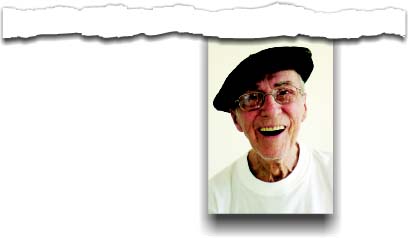
néstor baguer sánchez galarraga The Dean is writing a book. He asks us to hasten the interview, for he has written a mere 50 pages and, at his age, has very little time to spare. In August he will turn 82 and hopes to tell, in his own words, everything he experienced within the world of Cuban "political dissidence", a world he got to know as well as the palm of his hand, and of which he can doubtless furnish us with astonishing anecdotes. Néstor Baguer Sánchez Galarraga, perhaps the oldest active agent of Cuba's State Security, wants to avoid an introduction in an interview where time promises to fly. Here it goes, then, without much further ado. AGENT OCTAVIO Why did you choose the name of Octavio? I chose it after Octavio Sánchez Galarraga, an uncle of mine who would have loved doing that sort of work.
| |

|

What did your uncle do? Octavio Sánchez Galarraga was a lawyer; he defended people of modest means. Another renowned Sánchez Galarraga was my uncle Gustavo, who was a poet and a journalist, one of the few that stood up against Machado's dictatorship. He gave a speech at the Vedado Tennis Club (now the José Antonio Echevarría Social Club), speaking against Machado, on a December 31, and the dictator called my aunt María, the mother of the Galarraga family. "Listen, see what you can do with that boy, because Crespo — the thug — is after him, and I can't always protect him." There's something interesting. The Sánchez Galarraga family is of Basque origins. That's why we've preserved the beret, like the one I have on. Luis Ortega and Max Lesnik, two Cuban-American journalists who live in Miami, were friends of your father and told us that the last time they saw him was in Mexico. Yes, my father went into exile because his second wife — my mother had divorced him when I was two years old — had a hysterical fit and decided to leave Cuba. My father went after her. My brother emigrated along with him Your father was also a journalist… He wrote a column for El Crisol, which was a newspaper put out at noon. The press was on the corner of Manrique and Virtudes, in Centro Habana. He wrote reviews of shows. His name was Francois Baguer. When did you start out as a journalist? I wrote my first article when I was 14 years old. A number of students and I founded the magazine Siboney. Of course, I was in charge of the entertainment section. During your interview with the prosecutor that was held before the trial and was aired on television, you said that you owed your anti-imperialist views to your family. If there's someone who taught me to be that way it was my father. He used to quarrel with my uncle Gustavo Sánchez Galarraga, who | |||
|

| |||


|
wrote for the society pages. During the days of the Spanish Republic, Gustavo would say that if they wanted to kick him around, that they do it with 50-dollar boots. My father would answer that he preferred being kicked around with sneakers, because they would hurt far less. My father was the first Cuban journalist to be given a cultural award by the Soviet Union. Before the triumph of the Revolution? Yes. When the first Soviet movies were brought over, my father wrote excellent reviews. When everyone was saying that they were garbage, he was saying that they were works of art and that people should see them. The embassy gave him a cultural award. What happened to your father? Just think of it: the man, at his age, he had to work as a reporter in the Mexico City airport in order to survive. He would go to the airport at around three or four in the morning to meet with people. Nevertheless, he had been an extremely renowned professional in Cuba, a master journalist. I wrote him a letter, but my brother returned the sealed envelope to me, so I know that my father never found out what I wrote him. He died in 1986 and I got the news a year later. He had no need to leave Cuba. He had two pensions, one as an officer in the Navy and another as a journalist. He lived alone with his wife. He had both of us to help him, and that would have been more than enough to lead a perfectly comfortable life, but that woman's ambitions were something terrible. What were you doing at the time of the triumph of the Revolution? I lived in the Mulgoba district, in Santiago de Las Vegas, which was a rich people's neighborhood at the time. They put me in charge of organizing the Committees for the Defense of the Revolution (CDRs). Then came the Bay of Pigs invasion, and when I reported to the Militias, the officer in charge told me that I was needed here, that I should stay behind and carry out political functions, founding more CDRs and helping wherever help was needed. They needed someone trustworthy at the José Martí Airport, so they put me to work there, to guard it as a militia member. | ||
|
| ||
|
Afterwards, I was transferred to the Ministry of Foreign Trade, where they needed a journalist. The Ministry put out a daily bulletin that had a list of prices, financial analyses, economic plans. You have a degree in journalism? Yes. When I started out as a journalist, there were no schools of journalism here. I worked at El Crisol and I wrote. That was my school. Then the Marquez Sterling School was founded, and my father was a teacher there, but I had already gotten a taste of journalism and no one could tear me away from the presses. Writing was my thing. When the Revolution came to power, I got a call from Elio Constantín, who was an extraordinary sports journalist and the secretary of the commission established to validate the degrees of journalists. He asked me if I wanted to go to school or take an exam. I told him to give me a full examination. No mercy. I took the exam the following day and they gave me the degree. Nonetheless, in a Reuters dispatch that was published in The New York Times this past April 10, they refer to you as an "alleged journalist." "Alleged journalist Néstor Baguer" were the exact words… How strange! When I was a "dissident", the American press never thought of calling me an "alleged" journalist or an "alleged" dissident…No one would have thought of it. I'm going to give you a copy of my degree, so you can publish it in the book and dispel all doubts. When did you start working for Cuban State Security? At the time when I started working for the Ministry of Foreign Trade. How did it happen? It was an institution that was much sought after by the enemy, as you can well imagine. I had done a number of articles on Cuban products. For example, a study aimed at managing the export of Cuban bee honey. I studied the markets, the cost. In Cuba, honey can be produced year-round; the finest honey in the world can be made here. I was all caught up with my work on bee honey, when one fine day they started talking about the need to dredge Cienfuegos Bay | |||
|
| |||
|
and Havana Bay, and to buy the necessary equipment. It wasn't easy to get our hands on it, after the U.S. had declared the blockade against Cuba. But I had an English neighbor who facilitated the purchase. Armando Pérez Roura Born in Ceiba Mocha, Matanzas, and currently residing in Miami. He was a spokesman of the Presidential Palace during the Prío government, and kept this post during the Fulgencio Batista dictatorship. He was also a newscaster for Radio Reloj Nacional. During that same period, he was Dean of the School of Newscasters until 1961. In 1969, he sought asylum and took up permanent residence in the United States. He was a member of the terrorist-linked counterrevolutionary organization Alpha 66, and a correspondent of CORU. He was also one of the main directors of radio station WRYZ, or Radio Centro, which was bought by the CIA to broadcast anti-Cuban programs. He traveled to Venezuela on a number of occasions to interview the terrorists Orlando Bosch Ávila and Luis Posada Carriles, who were in prison for their participation in the blowing up of a Cubana Airlines plane over Barbados in 1976. He was involved in Posada's first prison escape plan of 1982. He also had ties with dictator Anastasio Somoza. In 1984, he joined the counterrevolutionary organization known as the Cuban Liberation Movement (Movimiento Libertador Cubano). Currently, he is the director in chief of the station Radio Mambi in Miami, accused of using "laundered" money, due to his son's known involvement in drug trafficking. The latter was caught attempting to enter a shipment containing millions of dollars worth of cocaine into the state of Florida in the early 1980s. He is the head of the terrorist organization known as Cuban Unity (Unidad Cubana), which has close ties to the Council for Cuba's Freedom (Consejo por la Libertad de Cuba), composed of terrorists from the paramilitary arm of the Cuban-American National Foundation (Fundación Nacional Cubano Americana, FNCA). | ||
|
| ||
|
Who was he? The manager, in Cuba, of the Lloyds Company, from London. He was a very English Englishman. Every afternoon, when I got home from work, he would say to me: "Baguer, your whiskey." It was an unfaltering ritual. It couldn't be at a quarter after five, nor at a quarter to five, but at five o'clock. When he heard me say that a dredger was needed, and that both Holland and Japan had refused to sell us one due to pressures from the United States, he proposed that we buy it in England. "That sort of dredger is built in Scotland," he said, and he gave me a card and even paid for my trip. He asked me for a commission. And that's how it happened. I took off for London with a fellow who worked for State Security. When we got there, we met a very friendly gentleman staying at the same hotel. He sat beside me. It was customary for regular visitors to be introduced to one another at the bar, and since I always sat in the same spot and he would always choose the same seat, they introduced us. He was an American; without much preamble he started to ask me about my business there. His insistence caught my attention, and I started to ask around. I found out he had gone there precisely because of my visit. That English company is the one that sets the prices for export? It is one of the largest companies in the country. I managed to get them to accept a seven rather than a five-year payment period for the Cuban government. I left for Scotland, to the shipyard, but they informed me that they could sell absolutely nothing to Cuba, for they would be placed on a blacklist. We proposed opening a London-based company with my English neighbor as head, and me as secretary. They agreed to that. The following evening I ran into the American. He introduced himself as a CIA agent, shook my hand and said, "You won, I lost. I respect you for that." That's how the famous dredger found its way to Cuba. Of course, when I got here I reported the incident to State | |||
|
| |||
|
Security, and ever since that time — the year was 1969 — I've been collaborating with them. I haven't stopped doing it since then. You continued working for the Ministry of Foreign Trade? No, I transferred over to the radio station COCO, as head journalist. Afterwards, I worked for Radio Metropolitana. When I began work in defense of the Spanish language, they called me up from the newspaper Juventud Rebelde to write a column, to which I gave that very title: "In Defense of our Language." After this I worked at the newspaper Trabajadores and at Radio Habana Cuba and the Cadena Habana radio network, and led a very active life in journalism, until I declared myself a "dissident". Why did you declare yourself a "dissident"? State Security asked me to establish contact with the mercenaries and I went to see Elizardo Sánchez Santacruz, who was the window into that world. How were you received? I got to his house and when I asked for him his wife asked, "Are you referring to the President?" "Well," I said, "if he's the President of Cuba, all the more reason to talk to him. Tell him that Néstor Baguer is here." Their Minister of Information… Who was just starting out, don't forget that... I went into the living room while they went to get the "President", and they brought me a glass of whiskey and a tray of seasoned olives. "Damn, they sure live well in the Palace!", I thought. That was the year 1993… The worst time of the Special Period, with terrible shortages everywhere. Elizardo came into the living room, he hugged me and told me: "Welcome! We really need you here, because my brother-in-law, Yndamiro Restano, doesn't know how to write, and I need a good journalist to take charge of the Independent Press in Cuba." I accepted on the spot. Right there and then… He was desperate. He suggested that I go on a scholarship to | ||
|
| ||
|
Costa Rica first, to a certain institute of journalism there, I don't recall the name. "You can go there for two or three months, and we'll cover all of your expenses." I answered: "Look, Elizardo, after so many years of work for the Cuban press, I can't accept being sent to Costa Rica to learn journalism. Costa Rica is a piece of shit, I know the place. Send someone else there." That's what he did, and the man he sent there didn't come back. He then told me that he would find someone to buy my articles first. He spoke of a magazine that was published in Puerto Rico, Disidente, where he had invested some money. He is a partner in that business. Afterwards, when we were closer, he asked me to go there everyday, whenever I wanted to, to read the latest news and get suggestions from him. Did you do it? No. I wasn't going to let them do with me what they did to the other poor bastards… What did they do? They used them for serving coffee more than writing. I told Elizardo that I couldn't take a bus to his house everyday, that I would write the articles and that he should tell me who to send them to. That they could pay me afterwards and everyone would be happy. Do you know what he answered me? "We can't work it that way, because I need to have everything under control." "Well, Elizardo, then I think we can't go on working together." Elizardo is a sharp guy. Yes. He was a philosophy professor at the university. He has a speech which he hasn't changed in 20 odd years. He doesn't touch it. He's a real snake; he declares in public that he doesn't take money from the Americans, forgetting to mention: "unless they send it from Europe." The people who send him the most money are the Swedes, the French and the Spanish, and he's never been short of money. He has an ego that's out of control, he's someone who flies in and out of the country as he pleases. He's a very special case. | |||
|
| |||
|
He had a public "falling out" with the Americans over issues of funding. You have to hear him and his buddies go on about that. It's circus, my friends, with puppets and all. You lost touch with Elizardo, then… Not completely, but I managed to tear loose from his grasp because I already had links in Miami. The other "journalists" would tell me: "Listen, don't be stupid, you'll get to eat anything you want there, and drink whiskey." Where were those things coming from? From the Spanish embassy, they send him a hundred dollars' worth of food every month, and I know this, because on one occasion, when I was there, the car from the embassy came with the month's quota. The bag came with a number of bottles of cognac and very fine Spanish wine. Month after month. He's never lacked for anything since he became a "dissident". He also receives money from other places. For example… From the Swedish Liberal Party, who were also over at my place. I don't recall the names at the moment, but I have all of their cards. Speaking of which, I have a very interesting anecdote about the Liberal Party. One day, Osvaldo Alfonso, who is now in jail, came over to my place to ask me to join the Liberal Party. I asked him: "Tell me something, are you from the Cuban Liberal Party? With all its tradition?" "Yes, of course…" he told me. "Damn, the party of Machado and all his murderers?" "No, no, hold on," he answered. "We have to get something clear: Machado was a Party mistake." I broke out laughing: "Give me a break, man, I don't buy it. Look, if you're from the Liberal Party, then I'm from the Conservative Party. So take a hike…" When did you establish the Cuban Association of Independent Journalists (APIC)? With Elizardo. I got congratulations from Miami, tokens of love and affection. They thought I was the bravest of patriots. Reporters Without Borders praised me everywhere and sent me money. That was incredible. As soon as news got out that I was in charge of the Agency and was handing out money, the "journalists" started | ||
|
| ||
|
descending on my house like ants. Do you know I had no idea that Cuba had so many "journalists" hidden in the most unlikely jobs and professions? I had a correspondent who was a railway worker in Cienfuegos, who had spent his life hammering away at the railway lines. He's in jail now. But they know how to write, no doubt, because there are so many newspapers and websites that publish their articles? If they made "spelling" errors while talking, can you imagine how well they wrote? It was very painful for me to have to fix up some of that rubbish. Why did they approach an agency that was allegedly made up of serious journalists? There were two main things that attracted them. Firstly, the visa they would automatically obtain. It sufficed to have been writing in the agency for a month to be put on the first plane to the United States. They were spared the line-ups, the unpleasant moments and the humiliation one endures in the U.S. Interests Section. Secondly, the pay. Something from 20 to 40 dollars a month, just for twiddling their thumbs. There was a time when so many people showed up that I could hardly manage it. During that time, Raúl Rivero decided to leave the APIC and found his own agency. How was your relationship with Rivero? It was very good. I felt for Raúl Rivero. He was the one true journalist that I knew in that world, a man who had had prestige at one point or other, because of his poetry, because he had fought at the Bay of Pigs. A man who owed his life to the Revolution. In what sense? I was the closest friend that he had and we knew each other well. He was an alcoholic and suffered greatly. Everyone turned their backs on him, he had no money, his house fell down. He became seriously ill, and he was placed in a hospital under the Revolution. He got to be so well that he quit drinking. | |||
|
| |||
|
And what happened to him? He was bought. Raúl Rivero has thousands of dollars deposited in the United States thanks to the awards that he's received. All of the leaders of subversive groups also have money outside of Cuba, because they obviously wanted to keep it safe, at a distance from the greed of others and from the interventions of the government, for reasons I needn't explain. Even a child can realize that the life of a "dissident" in Cuba is great business. How would you receive the money? Through Transcard; I refused to receive anything from those messenger-people that are continuously coming over from Miami or other places. That's why I was the one who received the least money and gifts. Why? My dissident articles were different from others. My articles were respectful. For example, I would refer to the Commander in Chief by saying, "the President of Cuba, Fidel Castro," while others would refer to him as "the dictator" or this and that. Even the Americans were surprised. "Mr. Baguer, you don't hate Fidel Castro," they would tell me, and I would answer them, "I have no reason to hate him." Who among the Americans told you that? The one who was in charge of the press and cultural affairs at the time, the fat guy, Gene Bigler. He became a very good friend of mine. When he left, Bigler wrote me from Rome, telling me that should I need anything I should write him immediately. What did you answer Bigler, when he made these kinds of comments on your articles? That I was a member of the Royal Academy of the Spanish Language, and I couldn't bring myself to write insults. I wasn't prepared to have them expel me from there. An "independent" journalist pointed out that I never used the word gendarme to refer to policemen. What a blockhead! "Look, buddy, they have gendarmes in France; here we have policemen," and I would write it like that. | ||
|
| ||
|
What sorts of news would the correspondents send to the APIC? If I hadn't taken it to heart so much, I think I would have had a lot more fun. I remember a day, for instance, when one of them called me on the phone to dictate an alleged news story, it was very urgent. The man wrote something along these lines: "In Manzanillo, there are 10,000 people on a street corner protesting because a family is being evicted from their home." I remember yelling at him, "Look, hold on a second. What street corner in Manzanillo, or anywhere else for that matter, can fit a group of 10,000 people? And also, why are they doing it?" And he answers: "See, this family wanted to live in Manzanillo and this other one in Bayamo, and they started moving furniture from one place to the other, without papers or anything." "Please, my good man, tell me of a place in the world where you can exchange homes without legal papers. Look, I'm sorry, but bring me another story." It was like that every single day. Can you think of another example? A person showed up telling me that his father had told him that a cousin of his had been beaten up in jail. I asked him if his father had seen this, and he told me no, he had heard it from someone. I told him, "The first thing a journalist has to do is verify the source," and I sent him on his way. You never caught anyone's attention with those opinions of yours? They saw no connection between the government and myself, and I did made criticisms, but very elegantly and correctly. That's why journalists kept leaving for other agencies, which spread like fungi, where they made different kinds of attacks and were, because of this, better paid. Around that time, we got the news that the U.S. government was going to hand out much greater sums of money through the National Endowment for Democracy (NED). I continued to work earning a modest 50 dollars a month, as head of the APIC, but part of that money started coming in and people became interested in it, especially those in Miami. I can tell you that 80 percent of those millions of dollars stayed in Florida. You know this? Of course I do. The stream of money would shrink from Miami to | |||
|
| |||
|
Havana, and from here to the provinces also. Our representatives would keep the biggest piece of the pie, then came the heads of subversive groups, then the others. In order to get a hold of the hundred and so dollars that Cubanet owed me, I had to go to the U.S. Interests Section to denounce the head of the agency, who had pocketed the journalists' money. Did it work? Did it work? The Public Diplomacy officer at the Interests Section called them on the phone and gave them a deadline to pay up the debt. They tried making excuses on the other end, saying they had no money at the time… The man from the Interests Section gave them an order: "You have to pay Baguer immediately and cancel the debt. I'm going to call him at the end of the month to see that he's gotten the money." That did it. Cubanet From the time of its creation in 1996, Cubanet has been a web-site devoted to publishing the "journalistic works" created by counterrevolutionaries, addressing the purported violation of human rights in Cuba. From the start, it has received federal funding from the U.S. government through the National Endowment for Democracy (NED). In 1999, it received 99,000 dollars for that fiscal year. In the year 2000, it began to experience financial difficulties, and at the end that year, 15 "journalists" were expelled from the website, resulting in conflicts between the agency's organizers and the counterrevolutionaries, combined with a number of scandals over the lack of "professionalism" of the articles published. In August of 2002, Cubanet was struck by a financial crisis and could not keep up its former publishing capacity, having to suspend the payment of the "salaries" of 25 "independent journalists" in the City of Havana who had already published their articles. This situation led to quarrels among its collaborators, who registered their complaints with the U.S. Interests Section. | ||
|
| ||
|
How did you become involved with Cubanet? It's a culinary story. Rosa Berre, who invented Cubanet, would record the articles that I dictated to her. She had the phone in the kitchen of her tiny apartment. She would receive the stories while she cooked and would pass them on later. She led a very modest life, and at first received a very small commission. One day she tells me she is moving to the heart of Miami, because she had bought two apartments there. One was to be her place of residence and the other would house the Cubanet offices. She was also able to buy a car that cost thousands of dollars, all of this with her modest "savings", poor girl, she was very thrifty, you know. Did her work conditions change after this? Yes, because by the looks of it she received more money as more and more people joined the cause of "independence." It was so easy to earn a few dollars that you would hear of a new press agency and people quarreling over money almost every day. The people that stole the most money were the ones from the New Cuban Press (Nueva Prensa Cubana), Free Press (Prensa Libre), and Rosa Berre. All of them were Cuban and they were stealing money from the journalists. I remember a young man who had worked at a printing press and pretended to be a journalist. He got to be head of an agency, then grabbed six month's pay and disappeared. There was a change in the payments around that time, also. From the 50 dollars that they were paying, it went down to 15 or 20, even when more or less the same sums of money were coming in for the "bosses" to distribute. They would get 50 dollars to give out and would hand over only 20. It was shameless theft. And everyone knew about the quarrels that went on because of this. Anyone could open a press agency? More than 30 of them were opened. The more capable you were with your insults, the higher you were on the scale of values in Miami and the Interests Section. The more groups of alleged journalists, the better. The more they yelled, the better. | |||
|
| |||
|
You would review the articles and then send them to Cubanet? That's why I gradually lost all of my clients. Anyone with a minimum of education and professional experience who was forced to spend a half hour with those people would end up sick, my man. What was the reaction of the Interests Section? If no one like myself went over there and put up a fight, they would turn a blind eye. They were more concerned with other things. With what, for instance? With the conspiracy to promote the "persecuted independent journalists" before international public opinion, and with supplying them with awards and the best of possible conditions to work in. And with ensuring that they weren't short of visitors and diplomats they could cry to. Tell us about some of those visits… The year 1995 was very intense, for instance. I have more than 60 activities I participated in jotted down in my notebook, all of them promoted by the U.S. Interests Section, which acted as a public relations center, to facilitate encounters with American visitors of every ilk, and with the representatives of the international media and journalists' organizations. For example… January 15: A meeting in the house of the head of the U.S. Interests Section, Joseph Sullivan. An interview with American editors. July 20: A meeting with the American delegation that attended the immigration talks. I won't tell you what we discussed, because it's obvious. August 12: A meeting in diplomat Gene Bigler's house, where a group of officials from the U.S. Interests Section are given details on the creation of the College of "Independent Journalists", which had been founded in my home some days earlier. August 30: a meeting with the State Department Committee on Immigration Issues. It was announced that 20,000 visas would be handed out in 1996, distributed in the following manner: 12,000 would be given to regular citizens who requested a visa; 7,000 to | ||
|
| ||
|
political refugees; and 1,000 to be handled by the U.S. Interests Section. September 20: Presentation of a donation from Reporters Without Borders, an organization based in France. Robert Ménard, the secretary-general, and Andrés Buchet presented me with paper, typewriter ribbons, a dozen pens and 1000 dollars to fund my so-called press agency. September 20: I was summoned by the official Robin Diane Meyer to be reproached, along with Yndamiro Restano, Olance Nogueras, Julio Martínez and others. She was very upset over a document that had been sent to the U.S. Congress without prior consultation with her, which had the signatures of 127 Cuban citizens. September 27: Cuban-American journalist Roberto Fabricio, who was then the executive secretary of the Freedom of Press Committee of the Inter-American Society of Journalism (SIP), met with a group of people that included myself. This man had been director of El Nuevo Herald. We met in the home of Yndamiro Restano's parents, and he asked us to draft a fierce denunciation he could formally present to the SIP. November 7: Robert Witajewski and Robin D. Meyer call us to meet in the home of the former to explain why some of us hadn't signed the Cuban Council project, to which we answered, with the best face we could muster, that we were "independent journalists" and we couldn't get mixed up in politics. She thought this was reasonable. I won't go on with this because this interview will become very boring. I had to visit the U.S. Interests Section so many times that you wouldn't be able to fit all of the meetings in one book. I have to confess one thing: every time I set foot in there, I would ask myself: "What sort of independent journalists are we? Independent from what?" | |||
|
| |||
|
Ernesto F. Betancourt He traveled to the United States in 1948 and studied advertising and marketing at the American University of Washington (1953-56). From 1957 to 1958, he was a representative of the 26th of July Movement in Washington, and registered himself with the State Department as a "foreign agent". During the first months of the Revolution, he returned to Cuba. He was named Director of Foreign Exchange Control for the National Bank. He decided to return to the United States in 1960. He worked in the Organization of American States (OAS) for a period of 16 years, where he was given the position of budget administrator. There he met the counterrevolutionary Frank Calzón, with whom he maintains close ties to the present day. From the time of the creation of the Cuban-American National Foundation (Fundación Nacional Cubanoamericana, FNCA), Betancourt served as an adviser for the organization. In July of 1983, he participated in the Cuba Project conference sponsored by the Center for Strategic and International Studies (CSIS) of the University of Georgetown, in the United States. In June of 1985, he was named provisional director of Radio "Martí", and was replaced early in the year 2000. He has devoted himself to drafting memorandums and other defamatory documents aimed against the Revolution and its leaders, and has promoted different campaigns to exacerbate existing tensions between Cuba and the United States, on such sensitive issues as bioterrorism and the alleged threat that Cuba represents for that country. On a number of occasions he has been quoted as an intelligence analyst. Talk to us about the last time you set foot in the U.S. Interests Section or its official premises… The Day of the Cuban Press, on May 14. A workshop was held at James Cason's home, with all of the "independent journalists". They paid homage to my career in the "independent press" and gave me a diploma. They had the bad idea of asking me to direct the | ||
|
| ||
|
discussion on the issue of Ethics. There were representatives of the U.S. government there. I told them that a single conference would not suffice to cover the issue, and that we needed a whole course on ethics, because the vast majority of those gathered there claimed to be journalists and hadn't the slightest bit of education. Their texts were not even up to a sixth-grade standard. I apologize to all children in the sixth grade. You also set up a section in Cubanet devoted to language issues, no? I would go out and harvest examples. There were so many atrocities that I had more than enough for my section. They would be presented as though they had been taken from the Cuban press, but in truth they were written by the "independent journalists." For example, do you know that once I saw a headline that claimed that an earthquake in Turkey had caused enormous destruction in the island of Samoa? The writer had no concept of geography. The island that was destroyed was the Greek island of Samos, the land of Pythagoras. My God, what ignorance! It's difficult to imagine a member of the Royal Academy stuck with such duties… Sometimes I would tell my official that nothing could pay for the suffering I had endured listening to those idiots talking and reading their stories and all of the things they did. Listen, not even a fourth-grader could write that badly. The renowned "independent journalist" Tania Quintero has no idea what it is to write, but if you look her up in American newspapers, she is identified as one of the great, founding members of the "independent press" in Cuba. There was a person there who was illiterate even in speaking. He was a santero (a practitioner of the Afro-Cuban religion santería), he lived in San Miguel del Padrón (a neighborhood in Havana) and you should have seen the things he wrote. The saints were definitely not with him. You couldn't even make out what he was saying. Would the U.S. Interests Section tell you what to write? They didn't dare do that, because they knew me well. | |||
|
| |||
|
You would propose the topics, or were they the ones who chose them? Not me. The U.S. Interests Section chose the topics for the mentally retarded, pseudo-journalists… And not only that, but also, after they were done writing them, before putting them out, they would go to the Interests Section so they could go over them in case there was something in there that was politically inconvenient for them. They would submit them after they had been approved. They complained about censorship in Cuba and I watched them bow down to the censorship of the United States. Open Eyes (Ojos Abiertos) On January 16, 2003, the launching of the book Ojos Abiertos was held in the home of Héctor Palacios Ruiz, a member of the Center for Social Studies. The event was attended by a group of counterrevolutionaries and several members of the diplomatic corps accredited in Havana. James Cason, head of the U.S. Interests Section, was the highest ranking diplomat in attendance. Printed in Mexico in November of 2002 and presented at the Book Fairs in Guadalajara, Mexico and Madrid, Spain, the book is the fruit of a contest sponsored by counterrevolutionary organizations in Miami. It is 248 pages long and gathers the writings of 20 counterrevolutionaries and the works of various Cuban artists residing abroad. This contest was preceded by another held in the year 2000, marked by scandalous manipulation of the selection and award process, which was overseen by Raúl Rivero, as president of the jury, Elizardo Sánchez Santacruz, and Héctor Palacios from the Center for Social Studies. The latter received the top prize. Between this and the moronic things they were saying, it was all becoming unbearable. The Americans put some effort into raising the standard of the "independent" journalists, who were the butt of jokes and a cause for quarrels within the ranks of the "dissidents". They proposed to both Raúl Rivero and myself that we establish a school within the U.S. Interests Section. Neither of us accepted. Later on, Ricardo González Alfonso asked me for the same thing: to give the journalists lessons. | ||
|
| ||
|
When was this? This happened not so long ago. Ricardo was already the head of Manuel Márquez Sterling Journalists Society. A school open to everyone? No. Only for his people. It was going to be over in Miramar (a neighborhood of Havana), where he lives. I accepted and asked him how much he was going to pay me for giving the lessons. He asked whether I expected to earn more than Raúl Rivero and himself. I told him, "Why not? Rivero is a journalist, but you don't even know how to write your own name." He promised to tell me how much he would pay me, but then the Comandante showed up and the party was over (Translator's note: This is a line from a Cuban song) . What was Raúl Rivero's opinion of those people? He thought they were all idiots. He was in complete agreement with me. When the U.S. Interests Section wanted us to give lessons, he said, "No, no, how can we get involved in that? They're all idiots, ignorant people. They don't know anything about grammar or composition, they don't know anything, period. We're going to bust our heads with those imbeciles, for nothing. Let's turn them down." That's what we did. Did you ever interview a U.S. high official on the request of the U.S. Interests Section? The last was my friend James Carter. I call him "friend" because, when he was president, he invited me to the United States to give Spanish classes at the university where he had studied. When he came to Havana, he sent for me to have lunch with him. In private? No, there were other people there. He had me sit close to him, with a single person between us, to talk with me. He asked me about the "Varela" Project, and I spoke to him in all honesty. What did you tell him? That it's a failure. That Oswaldo Payá is nothing more that a frustrated altar boy. No one in Cuba pays attention to him. Payá would constantly show up at my place: "Hey, Baguer, do an | |||
|
| |||
|
interview with me." He would show up a month later with the same story, and I would send him on his way. Roberto Rodríguez Tejera In 1985, he worked as a commentator on Miami TV's Channel 51 and later as editorial and news director. In 1988, he worked as a journalist for the Cadena Azul network. In 1990, he acted as director of Television "Martí" in Miami. He has ties with the counterrevolutionaries Hubert Matos Benítez and Ramón Saúl Sánchez Rizo. He is closely linked to the Miami extreme right wing. He is one of the sources of funding for the "independent journalists", notably Raúl Rivero Castañeda. I knew him from the Cerro neighborhood, where we both lived. I used to see him walking around in ripped pants, and now he goes around like a president, in a minivan. He claims the Church gave it to him, but we all know he bought it himself. One day I told him straight what most of the "dissidents" were saying: that he paid for the signatures (on the "Varela" Project). And what did he answer? That it wasn't true, that it was something made up by the communists. It was the counterrevolutionaries themselves who had told me this, that this is what he had done in eastern Cuba. Furthermore, I know of "dissidents" whose signatures have appeared on the project when they have not actually signed it, because they can't stand Payá. That's the case with María Valdés Rosado. Those people just go on cheating one another and fighting among themselves to become the leader who finally gets a hold of the cake, to start handing out scholarships, money, positions, exactly what takes place everyday in almost every country of the world. With Payá, that's two "future presidents" of Cuba that you know. Were they the only ones who presented themselves as such? No way! You have to include that other gangster, Ricardo Bofill, on the list of candidates for president of the New Republic of Dependent Cuba. There are many aspiring candidates, really, many press agen | ||
|
| ||
|
cies and many political parties. The only thing missing is people to follow them. Just like that new press agency I ran across in Santiago, made up of a mother and son, neither of them journalists. What can I say about the political parties? I know of four members that make up the Christian Democratic Party, for instance. Oh, and I was forgetting about another "president": Vladimiro Roca. Why do you say that? Because he had delusions of grandeur. Vladimiro's wife — his former wife, not his present wife — was a friend of mine. I would pay her visits and she invited me to lunch on more than one occasion. If I visited that house, it was because of her, she was a good person. I'm going to say something blasphemous: may Blas Roca forgive me, but how annoying and idiotic his son is! He's unbearable. One day, I told him something I just couldn't keep inside: "If your father could hear you, he would rise up from the grave and spit on you." Blas was a man who was loyal to the Revolution and a good person all in all. Do you know what his son told me about him? That his father had been an idiot, because when the Revolution triumphed he had handed his party over to Fidel, who gave him a worthless little position in turn. Just think! I had known the old man. Just look at the mind of this little scoundrel! When you met up with the other agents, now their true selves, who surprised you the most? Tania was my biggest surprise. Why? I would have never thought it. She was my friend, but she was one of the oldest and fiercest "dissidents". A real tigress. Who else? Orrio, or Agent Miguel. We would have quarrels of Olympic proportions, and when we saw each other then, at the moment of truth, we hugged each other and I couldn't help telling him: "Look at you here, and you were such a bastard! And we're even having a drink together, damn it!" | |||
|
| |||
|
I TOOK MY ORDERS FROM THE U.S. INTERESTS SECTION ALONE | |||||
|
ODILIA COLLAZO VALDÉS 175 | |||||
|
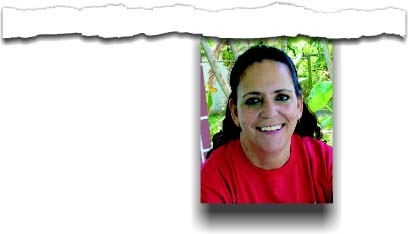
Minutes before the trial, Odilia absently took out a CD of songs by Fito Páez. She was tense. In a few minutes, she would be giving evidence in front of several of alleged "dissidents", after having been one of them until just a few hours earlier. Not that she was afraid; she was just unsure whether she'd be able to throw off completely the guise and vernacular of the hard-line counterrevolutionary, which the real Odilia Collazo Valdés, Lily — otherwise known as Agent Tania of the State Security Service — had been hiding behind. She opened the CD case and, to while away the minutes before they called for her, she started to read the insert. There was one song, set to music by Fito, with words by an anonymous poet. She read: "I offer you my yesterday / my before / my after / my always / my perhaps / and my already." "It can't be," she said to herself, and from that moment her doubts evaporated. | |||||
|
Those lines didn't come to her by chance. Her last words at the trial, after one of the most devastating depositions ever heard in the Supreme Court, were those very words: "I offer you my yesterday / my before / my after...." Her voice was strong and clear. "Here," she said, looking at the accused, "is what Odilia Collazo thinks. And I want to dedicate this poem to Fidel." AGENT TANIA What sort of schooling did you have? I learned crafts from a very early age. When my children were eight and nine, I started working at an army base, in the artillery. The officers there told me I should study, that it was a shame that I didn't. Then there was a recruitment drive by the local authority, and I went along. Really, I would have liked to be a doctor or a nurse. Or a journalist. In the end, the Revolution rewarded me. In what way? In 1988, State Security in the San Miguel de Padrón district approached me and said they needed me to get in with some people in the human rights groups operating in the area. San Miguel is a district that's had its problems. Ricardo Bofill was living in the neighbouring Mañana district. After a spell in jail, he worked in the canning factory and started recruiting people there. What did you say to them when they asked you to do this? That I couldn't. But they talked me into it. That year, I was managing a grocery store very near where they were holding their meetings. Who did you make contact with? I was living next door to the mother-in-law of Roberto Bahamonde Masó, the counterrevolutionary who's now in the United States. I'd known the family from when I was a girl. Was that the birth of Tania? No, that was the birth of Betty. Betty was my first codename. Tania | |||
|
| |||
|
came later, in honor of Tamara Bunke, Che's comrade-in-arms in the guerrilla war in Bolivia. On May 20, 1988 I joined the Cuban Pro Human Rights Party (Partido Pro Derechos Humanos de Cuba). In 1993, I was elected its president. How did this promotion come about? It all started because of a telephone. I was the only activist in the Party who had a phone. So in 1991, I became the spokesperson on the National Executive. Where I lived had other advantages: it's in the basement and its got a patio at the front... All these things made the work easier. Juan Betancourt Morejón, who at that time was party secretary, started visiting me with Carlos Orozco and Nelson Torres Pulido. My home became the scene of anti-government plotting, and there were a lot of frictions, because I'd taught my children from an early age to love the Revolution, and they didn't understand this sudden change. My family slammed the door on the counterrevolutionaries, set the dogs on them, did all kinds of unpleasant things to them. How did you resolve the dilemma? Sometimes I had to go out on urgent assignments for headquarters; at home they thought I was in love with a State Security agent, who they had seen me talking to occasionally. He was much younger than me and they asked me if I realized I was cradle-snatching. I was single at that time and this situation was a real problem. They disconnected the phone cable so the phone wouldn't work. Things improved later, after I met my present husband, Roberto Martínez Hinojosa. How come? He's more my age and his support and affection have been fundamental. He's also a State Security agent. Roberto Martínez | ||
|
177 | ||
|
What operations were you involved in? In 1991, I helped get Bahamonde out of the country. That was one of the most difficult jobs, because the man's paranoid and imagined all kinds of things. When he finally got on the plane on September 28 that year, I could hardly believe it. I've since found out that he's in Miami and is suffering from Alzheimer's disease. Was there anyone representing the Pro Human Rights Party in Miami? Yes: Samuel Martínez Lara and Evelio Ancheta, who were both members of the Cuban Democratic Consensus (Concertación Democrática Cubana) which included several groups: the Independent Medical Association (Colegio Médico Independiente), November 30 Party (Partido 30 de Noviembre), Harmony Group (Grupo Armonía), Cuban Democratic Directorate (Directorio Democrático Cubano) and others. They sent me my instructions, until one fine day I started getting them directly from the U.S. Interests Section. Through whom? Victor Vockerodt and Timothy Brown. What did they want you to do? They told me they needed surveys. We did one of people's attitudes to the embargo, whether they were for it, against it, or abstained from answering. We set up a team: Horacio Casanova, other people and me. We sat around a table with a map of Havana and started the survey in San Miguel del Padrón, then in the Cotorro district, in Havana Vieja and Centro Habana... without leaving my place. We invented all the information, from one end of the city to the other. Casanova told me to avoid even numbers, that odd numbers were more convincing. So we decided that 71% were in favor of lifting the embargo, 17% were against, another group abstained from voting and the remaining fraction refused to speak at all. All the numbers we quoted were odd. | |||
|
| |||
|
What were relations like with the U.S. Interests Section officials? One day in 1991, Jeffrey De Laurentis — the vice consul at the time — was talking with counterrevolutionary Nelson Torres. I walked into the office with Horacio Casanova and Nelson Pérez Pulido to deliver one of those famous surveys. De Laurentis started abusing Nelson Torres and Horacio. He was a cold man, a real tyrant, who always looked down his nose at us. I faced him and said, "Look, I'm out there in the streets with State Security on my trail day in, day out. You should respect us; this is our country," and a few more things. He took off his glasses and asked me what I wanted. "I don't want anything," I said, "You're the ones who wanted the survey and now you've got it." After that, whenever I went to the Interests Section, they called me in first, ahead of all the other counterrevolutionaries sitting there waiting to talk to him. That's how I got in with them. Did they ever suggest that you emigrate? Yes. Before I started bringing them information and surveys. In 1992, they gave me an immigration form to fill in. I was in a terrible state, because I didn't want to go. They told me I had to fill it in and send it off. I filled in the form, because I was sure they wouldn't give me a visa. I knew several people in my neighborhood who wanted to emigrate for family or economic reasons and had lined up outside the Interests Section offices; none of them got a visa, even by mistake. I got the reply straight away. I'll never forget it; the appointment for my interview was for December 12, with Mr. De Laurentis again. He approved my application on the spot. But I didn't want to go. Did you also provide endorsements for people who wanted to get visas? Loads of them. Were you paid for them? Of course not. | ||
|
| ||
|
Council for Cuba's Freedom (Consejo por la Libertad Established on October 9, 2001 and registered on August 22 of that same year as a non-profit organization. It is directed by a board of eight members, made up of Luis Zúñiga Rey, Alberto Hernández, Diego Suárez, Elpidio Núñez, Horacio Salvador García Cordero, Ninoska Pérez Castellón, Feliciano Foyo and Ignacio Sánchez. Its political stance consists of an unshakable refusal of all dialogue, working principally with the counterrevolutionary movement in Cuba. It has actively lobbied against our country in the U.S. Congress. It is against all negotiations with Cuba and it declares the elimination of the present government of President Fidel Castro and his followers, be it through peaceful or violent means, to be its first priority. The chief leaders of the organization have been linked to the terrorist activities carried out by the FNCA during the 1990s, particularly to Luis Zúñiga, Alberto Hérnandez and Horacio García, who directed the organization's paramilitary arm and supplied the means and the funding for the violent actions they secretly carried out through other organizations. The ties between Alberto Hérnandez and the terrorists detained in Panama — Luis Posada Carriles and Gaspar Jiménez Escobedo — are well known; with the support and guidance of the CLC's principal directors, these terrorists have planned several assassination attempts against the Cuban president during his trips abroad, including the one intended for the 10th Ibero-American Summit held in Panama. They have increased their ties to leaders and members of counterrevolutionary groups in Cuba, systematically supplying them with significant financial resources, promoting the creation of clandestine organizations and encouraging them to assume ever more aggressive positions in their actions against the Revolution. | |||
|
| |||
|
At the time there were rumors that political endorsements for visa applications were being sold, weren't there? That's right. In fact, I told De Laurentis something that was very true: that people were saying the Interests Section was involved in this business, and I said I knew which people were selling their signatures at that time. One of them was Carlos Orozco. Then he asked me why I'd filled in the form to see him, and I told him that was the only way I could get to talk to him. At the second interview, they started playing with me, saying they didn't know what "vocera" (spokesperson) of the Pro Human Rights Party meant. They looked the word up in a dictionary and asked me why I had applied to join the Political Refugee program if I didn't want to emigrate. I explained that what I wanted was to talk to Mr. De Laurentis, to tell him about all the scams that were going on. They told me my application was approved and then started laughing, "No, no it isn't approved," because they needed me at the Interests Section to continue passing them information. Didn't they find it strange that a "dissident" was coming to them with tales against her cohorts? They saw it as a positive sign for their work. They knew I was quite well placed in the Party and decided it would be a good idea to keep me close. In the end, they sent me a letter turning down my visa application, and they were left convinced that I was a genuine defender of human rights, that I hadn't been going to the Interests Section to hustle a visa. Those were the toughest years of the Special Period ... In 1993, the situation was pretty tense, what with the power cuts and the shortages; there were problems, social, political, as well as economic. On instructions from State Security, I went on feeding the Americans the message they wanted to hear, or that my government wanted them to hear. | ||
|
| ||
|
Horacio Salvador García Cordero One of the top leaders of the counterrevolutionary organization known as the Council for Cuba's Freedom (Consejo por la Libertad de Cuba). He left the country in 1960. He had ties to the terrorist group known as the Student Revolutionary Directorate (Directorio Revolucionario Estudiantil), with which he promoted different terrorist acts against Cuba. He was one of the leaders of the Cuban-American National Foundation (Fundación Nacional Cubanoamericana, FNCA) until August of 2001. During his membership in the FNCA, he was tied to its most recalcitrant terrorist group, substituting Luis Zúñiga Rey in 1995 as head of the paramilitary arm of this organization. He continued facilitating funding for similar actions on behalf of the Foundation. He has been involved in the illegal smuggling of artworks into the United States and the introduction of counterfeit dollars into Cuba. He is the millionaire co-proprietor of García Menéndez Enterprises Inc. and a McDonald's chain in Miami. He has participated in the recruitment of counterrevolutionaries within Cuba, who have received instructions from him to organize clandestine cells and to carry out acts of sabotage and terrorism. In the year 2001, he gave orders to carry out such activities to members of counterrevolutionary groups, who established a conspiratorial structure and received systematic funding for their purposes. He supports the activities of counterrevolutionary leader Félix Navarro Rodríguez, who lives in the province of Matanzas, sending him financial aid on a regular basis. In June or July of 1994, I was talking to Robin Diane Meyer, the second secretary at the Interests Section, and I told her I was going to make a prophesy: "If you keep on refusing visas and boats keep getting stolen, there's going to be a revolt." I just wanted to | |||
|
| |||
|
know how she'd react. "This country's a pressure cooker and the only escape valve is emigration," I said. She told me her government wouldn't allow it. I told her firmly that whether Washington liked it or not, there was going to be a mass exodus. She answered, shouting: "Clinton won't let it happen!" After that came the rafters crisis and the U.S. government had to rethink things. Did the Interests Section ask for your cooperation at that time? Yes. They wanted me to hand out leaflets saying that the people who were leaving on rafts were going to the Guantánamo naval base, and that they weren't going on to the United States from there. Did they explain why they wanted you to distribute the leaflets? Look, they didn't want to believe there would be a mass exodus due to the policies Washington had applied up to that time. They were obsessed with the publicity the crisis was getting and were sure it would wear down the Cuban government. We wanted them to do something to discourage the people planning to risk their lives at sea and hoped they would agree to migration treaties. I invited her to my place. The neighbors were doing some carpentry and repairs, and it was really noisy all the time. She asked me about the hammering and I told her, "They're making rafts," and gave her a story about all the people in the neighborhood getting ready to leave. She was horrified. So a couple of days later, there was Odilia Collazo, the faithful servant, handing out leaflets in Cojímar. The Americans were presumably grateful to you ... They put their seal of approval on my appointment as president of the Pro Human Rights Party when Nelson Torres Pulido left, on September 2, 1994. And I've been president ever since, up until a few days ago. How did you make contact with the counterrevolution in Miami? By radio, over the Internet, by phone ... I was a regular on the roundtable discussions broadcast on Radio "Martí" Tuesday and Thursday nights, with Luís Aguilar León, a writer whose stuff appears quite often in the Nuevo Herald and is heard on the radio | ||
|
| ||
|
in Miami. In spite of being totally hostile to the Revolution, he is always saying that it's a mistake to underestimate Castro. I was also on this program with Omar López Montenegro. They were always phoning me. What other radio stations called you? La Cubanísma, Radio Mambí, La Poderosa ... I've lost count. Through Nancy Pérez Crespo, I started working with Agustín Tamargo, on a program broadcast every Monday, called "Round Table". I worked with him for years. Joe García A member of the Cuban-American National Foundation (Fundación Nacional Cubanoamericana, FNCA). In 1988, he was the coordinator for the FNCA Exodus Program, which re-located to the United States nearly 10,000 Cuban émigrés who had been living in Spain, Panama, Peru, Venezuela, Costa Rica and the Dominican Republic, among other countries. He traveled to more than 20 nations to carry out this mission. In late 1992 and early 1993, he traveled to Moscow, accompanied by Roberto Martín Pérez, to organize a similar re-location of Cuban émigrés residing in Russia. Both met with officials of the Ministry of Foreign Relations, Immigration, and the Russian Vice-Minister of the Interior. On May 19, 2000 he was named executive director of the FNCA, with a salary of 120,000 dollars a year. He replaced the terrorist Francisco José "Pepe" Hernández Calvo. His designation was considered one of the steps taken by the organization to salvage the tarnished image of the Foundation, brought about by its participation in the kidnapping of Elián González. On the radio in Miami, Agustín Tamargo called you "the Mariana Grajales of the dissidents." Why? He himself used to tell me I was his Mariana Grajales. He fell in love with my image as a tough fighter against the "Castro regime". Whenever something happened in Cuba, or at election time, or in | |||
|
| |||
|
the run-up to Geneva, Agustín would always put on a special program with me. He loved to hear me talk tough, shoot my mouth off. All I did was tell him and his Miami audience what they wanted to hear. He would tell me beforehand what the topic was going to be, of course. They would play the first notes, and I would sing the rest of the song for them, you could say. When was the last time you talked to Tamargo? A few hours before my cover was blown, in March. They had just arrested Raúl Rivero, Omar Rodríguez and the rest of them. I still didn't know that my real identity was going to be revealed. On the programme, I said, "The people who've been arrested in Cuba are not terrorists. They are fighters whose weapons were pen and paper; their bullets were medicines." Between the lines I was rubbing in the fact that everyone knows, whether they are "opposition" members or not: that smuggled medicines are being supplied to the "dissidents" to demoralize the Cuban public, thanks to Frank Hernández Trujillio, Democratic Action (Acción Democrática), the Democracy Movement (Movimiento Democracía), New Generation Cuba (Nueva Generación Cuba), Cuban National Resistance (Resistencia Nacional Cubana), Lincoln Díaz-Balart and the rest of the "exiles". Did you write as well? Yes. I wrote denunciations. Those reports on human rights violations in Cuba, the ones the Interests Section sent to the State Department, were written by me. At the beginning, I wrote them by hand; they must have a lot of reports in my handwriting and with my signature stored away. Later, I started using a typewriter and finally a computer. They arranged the copying. Things developed to the point where I was practically the secretary of Ricardo Zuniga, the political/economic chief at the Interests Section. How did that come about? He came to trust me so much that I would write the reports they asked for on the computer, send them in by e-mail, and he would pass them along to the State Department without changing so much as a comma. | ||
|
| ||
|
Where did you learn to use a computer and the Internet? There in the U.S. Interests Section. A Cuban woman there taught me. It was part of her job to help us "independent journalists" with our work, although she actually hindered it a lot of the time. Luis Zúñiga Rey He left the country illegally through the Guantánamo Naval Base in 1970. He was arrested and sentenced in 1974 when he attempted an armed infiltration of the Island. Out of the country once again, he became the vice-president of the counterrevolutionary organization known as the Association for Continental Peace (Asociación por la Paz Continental, ASOPAZCO), based in Spain and funded by the Cuban-American National Foundation (FNCA). During the 1990s, he began to play a more active role within the FNCA as a member of its paramilitary arm. He sought out, recruited and supplied Cuban citizens temporarily visiting the United States, whom he instructed to sabotage economic targets in Cuba. He has also maintained ongoing ties with the heads and members of counterrevolutionary organizations, whom he has attempted to involve in violent acts against Cuba. In April of 1994, he was removed from the leadership, although he continued his involvement in violent activities aimed at Cuba. He subsequently directed the FNCA project known as the Human Rights Foundation (Fundación para los Derechos Humanos), and was accredited for numerous consecutive years as a member of the Nicaraguan delegation, in order to intervene against our country at the Commission on Human Rights in Geneva. He left the FNCA in August of 2001 and joined the terrorist organization known as the Council for Cuban Freedom (Consejo por la Libertad de Cuba), maintaining an intransigent and violent stance. What sort of information about human rights did the Section ask for? About social, political and economic problems; what was happening to the prisoners; what the general gossip was about. | |||
|
| |||
|
After my success as a "forecaster" of the rafters crisis, in December they wanted my predictions about what would happen the following year. You can imagine what sort of workload that created for my comrades in Security. This monitoring was confined to Havana? No, no. It was coast to coast. On my visits to the Interests Section, they would sometimes ask me to show them on a wall map which region had the most problematic political scenario. They usually ended up deciding to visit the place I picked, and took me along so I could tell them who to get in touch with. Officially, the visits were to check if the migration treaties were being observed. That was the pretext, but they really went to see for themselves what was happening in those provinces. They wanted to confirm what they were being told. Did they pay you at the Interests Section offices? No. I never got money there. Meals and bags full of all sorts of things, but money, never. My pay arrived via Frank Hernández Trujillo and Democratic Action. At the trial, I was able to show the court all the equipment they had given to me as "gifts", the documentation for medicines, clothes and money that arrived from Miami. The month when I got the least money was when they sent me 100 dollars. How did the money arrive? By Western Union, using a Transcard card. They also sent it with "mules", people who came from Miami and got a commission for bringing us our money. Did you have meetings with officials at any other embassies? Plenty. In fact, my last "job" as a dissident was on March 12 of this year, at the Spanish embassy. I met with José María Fernández López de Turiso, who had just arrived in Cuba to begin work at the embassy. The Interests Section instructs you to visit other diplomatic missions, and not just the EU, Poland, Canada. They send you to the Caribbean, Latin American and African embassies as well. | ||
|
| ||
|
Why? To inform these embassies about the reports of human rights violations, so that this wasn't seen as something done solely by the Americans, or the people at the Interests Section, in particular; our job was to give them a "local" veneer. The idea was to put on a show to convince them that the denunciations were coming from us, the Cubans. There were some cases of genuine interference... For example? On January 6, 1995, Ryan Stevenson Jr., an official from the Canadian department of foreign affairs, asked for a meeting with some of us at the Canadian embassy. The people who participated were Héctor Palacios Ruiz, Aida Valdés Santana and me. He didn't just want to know about everything we were doing, but also the numbers of counterrevolutionaries, what the Americans thought, if they supported us; it was a real interrogation. At the end, he asked us what Canada could do to help the "opposition" and assured us they would keep up this kind of contact until we had achieved "real democracy" here. Meetings of this kind with visitors and accredited diplomats were pretty frequent. More examples? Go ahead. A lot of these documents travelled in the Spanish Embassy's diplomatic pouch. Support from Spanish diplomats has been consistent, at least up to when I stopped being president of the Pro Human Rights Party. The present ambassador is particularly obliging. He told us we could count on him for anything we needed. His people were also very nice to us: they copied documents for us, gave us pens, paper, typewriter ribbons ... In reality, they were a significant factor in supplying what we needed for our work. Were your instructions from the Interests Section to visit embassies just to report on human rights violations? No. Sometimes they would ask us to go there to promote particular individuals, who were up for awards. I saw this myself from inside the Interests Section, so no one can tell me any different: the awards, | |||
|
| |||
|
all the awards, originally come from there. I saw how they set things up for the ones presented to Payá, to Oscar Elías Biscet, to Elizardo, to Vladimiro Roca ... These people were nobodies, who were transformed overnight into "generals without armies". The Americans are experts at manufacturing "celebrities," especially out of people short on charisma or whose egos need a boost. The same thing happened with certain "journalists" and a few magazines. Such as? Such as Vitral magazine. I learned of its existence at the German embassy. At a reception, Wilfried Krug, an advisor there who looked after us "opposition" members, told us the embassy would be donating computers, printers and other supplies to the church in Pinar del Río, so it could start a magazine. Naturally, it would challenge the Havana regime. I remember asking him, "And you think the government is going to allow that?" "Yes of course," he replied, "They won't try to stop it now, just before the Pope's visit. We have to take advantage of the present circumstances." And that's how it worked out. I heard similar arguments when the Cuban Council (Concilio Cubano) and the "Varela" Project emerged, but that was in a different diplomatic setting. Where? The U.S. Interests Section. How did you become connected with the Cuban Council? Robin Diane Meyer and her assistant, Hilda Esquivel, introduced me there to Leonel Morejón Almagro, who'd been appointed national delegate ... The two officials themselves gave me the first draft of what became the charter of the Cuban Council, and asked me to read it. There were no signatures of course, and I was probably one of the first Cubans to see it. Did you agree to join? Not then and there. I told them I needed to discuss it with my Party executive; you know who I actually had to consult. But they insisted, | ||
|
| ||
|
"Please, tell us what you think. Now's the time to put pressure on the Cuban government to sit down with us and the opposition." I was a witness to the birth of the Cuban Council there in the U.S. Interests Section. I signed its charter a short while later, at the home of Héctor Palacios, who was appointed president. I was a member of Commission 6 of the organization. What was the Cuban Patriotic United Front (Frente Unido Patriótico Cubano)? It was created by my party. There was nothing unusual about it. Every time a group was formed and the top positions were divvied up, the people left out formed another group. Aida Valdés Santana created her own bloc; I formed mine. The Cuban Council started going downhill, without needing much help. What about the Front? Within two days I had 50 signatures of presidents of different groups. The Americans raved about my charisma and leadership ability, and said that it was amazing how quickly I'd got the signatures. I was laughing up my sleeve, because I knew just how much "help" I'd been getting. Then one day the Security Service told me to put the brakes on the Front, which was on a collision course with the Cuban Council. Actually, Leonel Morejón called me begging for mercy: "Please, stop the Front. A lot of people are going over to your side and it's weakening the cause." The Interests Section gave me a warning too. I was ready to stop anyway, because by that time the Cuban Council was dead in the water. However, I managed to persuade the Americans that the Front also had a role to play in the "democratic transition". What was the argument? Theirs: that several parties should be groomed, to strengthen civil society. I told Robin Meyer, "We've already got three camps for a democratic regime: the Communist Party on one side, the Cuban Council — the liberals — on the other, plus the Front, which represents the hard line." I told her we even had a slogan: "We're | |||
|
| |||
|
fighting in the front line." Robin Meyer got all excited, saying yes, that would be real democracy. And I said to myself: "That's what you think!" What went wrong with the Cuban Council? They started stealing the money; there were conflicts of interest. That was why the so-called Group of Seven appeared, which met secretly on February 10, 1996 in Diez de Octubre. Those of us who were left out started to protest. Who had elected Oswaldo Payá, Martha Beatriz Roque, Gustavo Arcos Bergnes, Félix Bonne Carcassés, Elizardo Sánchez, René Gómez Manzano and Jesús Yáñez Pelletier? In reality, they were the ones with the most clout, the ones with the strongest links with Miami and the Interests Section at that time. The "sacred cows". That created problems among the committees, because no one would accept them, without having been elected, as the representatives of the Cuban Council. The seven started monopolizing the money and ousted Leonel Morejón Almagro, who was supposed to be the Council's guiding hand and apparently had the backing of the Interests Section. The way they creamed off the money that came in from the "NGO's" in exile was outrageous and amounted to thousands of dollars, to judge by the standard of living of those people. Do you have evidence of how the money was getting through? The money sent to the Council for the February 24 celebrations was collected by Arcos Bergnes from the Czech Republic embassy. It had already been earmarked: |